



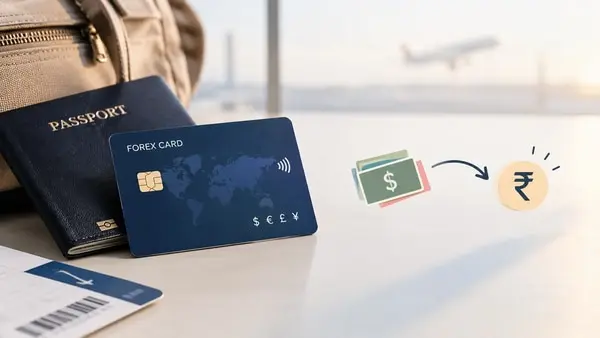
When a Indian resident travels abroad, they generally carry a forex card to pay for expenses such as accommodation, transport, food and experiences. However, it is not necessary to spend the card's entire balance during the trip, which means travellers may return to India with money left on their forex card.
This unused balance can be converted into Indian rupees (INR) through the card issuer’s refund or encashment process. The applicable process, exchange rate, charges, and refund method may may vary across forex card issuers.
How is forex card balance converted to INR?
The INR amount you receive depends on the foreign currency balance and the exchange rate applicable at the time of encashment. Any applicable encashment or conversion charges may be deducted from the final amount.
For example, if you have $1,000 remaining on your forex card and the applicable exchange rate is ₹96 per US dollar, the gross value of the balance would be ₹96,000 before deducting any applicable charges and taxes.
How to transfer unused forex card balance?
According to a report by Paisabazaar, some forex card issuers allow travellers to transfer the leftover money in their forex card to their bank account in Indian rupees. Though the facility and process may vary depending on the issuer, the process can look like this:
Step 1: Log in to the forex card issuer’s mobile app or online portal.
Step 2: Navigate to the forex card section and select the option for refund or encashment.
Step 3: Select the currency and amount you want to refund. You can also choose the option to refund the entire balance if it's available.
Step 4: Select the bank account where you want the refund to be credited.
Step 5: Check the applicable exchange rate at the time, additional charges, as well as terms and conditions before proceeding.
Step 6: Submit the refund request and complete any required verification.
Once your request is processed, the remaining forex card's balance will be converted into Indian rupees and credited to the selected bank account.
A customer can also visit the forex card issuer’s nearest branch with the required documents to submit a refund or encashment request form.
What documents are required?
Different card issuers may ask for different documents, depending on their rules for encashment or refund. The report states that in most cases, the customers are asked to provide the following list of documents:
- Forex Card
- Passport and PAN Card
- Refund or encashment request form
- Bank account details, where applicable
- Other KYC (know your customer) or travel-related documents
However, if you plan to travel abroad again, retaining the balance on your forex card may be more convenient. Before deciding, check the card’s validity, any inactivity charges and the applicable foreign exchange regulations.
How to choose a forex card?
Before evaluating options, it is important to understand what defines the forex card in today’s evolving financial world:
- Low or zero forex markup
- Transparent and predictable fee structure
- Strong global acceptance
- Real-time tracking and app-based controls
- Flexibility in usage
Among these, zero forex markup has emerged as the most decisive factor, as it directly impacts how much travellers spend internationally.
Major Indian banks such as HDFC Bank, ICICI Bank, IndusInd Bank and Axis Bank, among others provide this facility, but it's important to compare the applicable charges, encashment benefit and other terms before picking one for your upcoming International trip.