



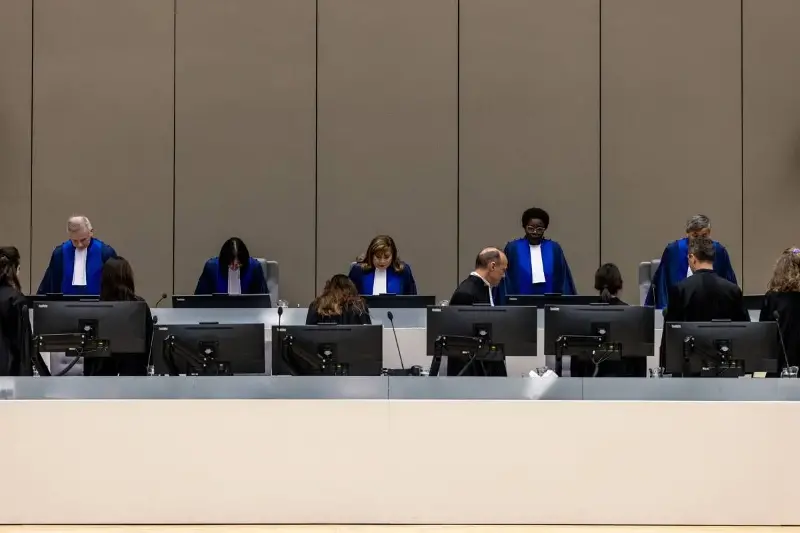
MANILA, Philippines — The International Criminal Court (ICC) will hold its first status conference in the case against former president Rodrigo Roa Duterte today, Wednesday, with judges set to tackle a sweeping agenda ranging from the trial start date and evidence disclosure to witness protection and victims’ participation.
The hearing at The Hague, Netherlands, will run from 3:30 p.m to 10:00 p.m (Philippine time) in three sessions: 3:30–5:00 p.m, 5:30–7:00 p.m, and 8:30–10:00 p.m.
Duterte, who faces crimes against humanity charges over his administration’s drug war, will not appear in person. Trial Chamber III granted his request to waive attendance, provided his defense filed a signed written waiver by May 25. His new legal team – counsel Peter Haynes and associate counsel Kate Gibson – will represent him.
Agenda at a glance
The public conference, though subject to private sessions for witness protection, will cover: -Trial start date and pre-trial deadlines – Judges will discuss when the trial should begin and set key filing deadlines leading up to it.
Anticipated evidence – The prosecution will update the court on the estimated volume of witnesses, documentary evidence, use of expert witnesses, and audio-visual testimony. The chamber will also consider applying Rule 68 of the ICC Rules, which allows previously recorded testimony under certain conditions.
· Agreed facts (Rule 69) – Both sides may identify uncontested points to streamline proceedings.
· Language and interpretation – Needs for parties, participants, and witnesses, a critical logistical issue given the involvement of Filipino evidence and witnesses.
· Disclosure obligations – Discussions will cover the impact of ongoing prosecution investigations, timing and volume of outstanding evidence disclosure, and transcription/translation issues.
· Witness protection – Protective measures, including delayed disclosure of witness identities, will be on the table – a sensitive matter in a case involving alleged state-linked violence.
· Potential addition of incidents – Prosecutors may seek to expand the scope of charges.
· Trial briefs and pending motions – Any unresolved motions requiring resolution before trial begins.
· Victims’ participation – A deadline for submission of applications and a mapping report from the Victims Participation and Reparations Section (VPRS).
· Protocols – Witness preparation, witness familiarisation, handling of dual-status individuals (victims who are also witnesses), vulnerability issues, and other pre-trial protocols.
What comes next
The conference is largely procedural, but decisions taken today – particularly on the trial schedule and disclosure deadlines – will shape the pace of the case. Other issues raised in written submissions may be taken up in future status conferences leading to trial.
The chamber, presided by Judge Joanna Korner with Judges Keebong Paek and Nicolas Guillou, ordered the conference to be public but may hold private sessions to protect witness security.