



As summer gets underway, our gardens are reaching their prime, bursting with color and vitality. And with the garden in all its glory, and the sun shining, it's peak time for outdoor living.
However, just as we're squeezing maximum joy from our gardens, the sun and rain (or lack of) can take its toll. Plants and flowers can soon start to fade, lawns may be scorched and things may need a zhuzh.
It's not realistic to expect any modern garden to stay looking beautiful for months without intervention. However, with a mid-summer reset, your garden can soon be returned to its former glory.
These are the small tasks landscape designers and garden professionals recommend to refresh your outdoor space now.
1. Deadhead Herbaceous Plants
Most flower gardens are in full bloom at this time; however, as the heat rises and summer progresses, some blooms will start to fade and brown. Being on top of deadheading these plants, without being overzealous, will give your garden a little refresh.
Deadheading herbaceous plants, including roses, salvias, and geums, will focus energy away from producing seed and into the flowering stems to encourage repeat flowering, explains landscape gardener Sarah Kay. "Removing old flowers will also prevent disease and stop prolific self-seeders from setting seed," says Sarah.
"Make your cut just above the next set of leaves. Although bear in mind that some spent flowers, such as hylotelephium, echinacea, and rosehips, provide beneficial food for birds and insects and improve the autumn and winter aesthetic of the garden. Hydrangeas and Group 1 Clematis should be left until early Spring to be removed."
Award-winning landscape gardener Kate Gould always deadheads her roses to encourage a second flush of blooms. "They might not be as full and lush as the initial blooming, but a second flush of Roses is always worth the effort," says Kate.
2. Prune Fast-Growing Climbers
As beautiful as they are on a front facade or clambering over a pergola, some fast-growing climbers can become a tad out of control by the height of summer, wrapping themselves around cables, or overhanging door or window frames a little too much. For some climbing vines, it's a good time for a trim.
"Wisteria should receive a summer prune in July, with the wispy stems cut back to 5/6 leaves to allow air circulation and encourage flower bud formation," says Sarah. "Climbing roses and clematis should be tied horizontally into their supports to encourage more flowers."
3. Stay on Top of Watering
Watering needs vary according to where you live. If you've had some summer rain showers, have designed a dry garden, or have an irrigation system installed, you may be able to relax a little. However, most flower beds, vegetable patches, and container gardens will need some supplemental watering at the height of the summer.
"Unless you have a completely drought-tolerant garden, watering is key during the Summer months," says Sarah. "To encourage deeper, stronger root growth, water for longer, but less frequently, aiming for the roots of your plants.
"Always water early morning or in the evening to avoid excessive evaporation. Pots will require daily watering in the height of summer, if there has been no rain, and always water pots until the water drains from the bottom."
4. Stake Leggy Plants
With the combination of sun and rain (or supplemental watering), many plants have a growth spurt. This can result in some tall plants becoming 'leggy'. Their thin stems are then at risk of being toppled by their blooms, which can damage the plant.
"If plants have become tall and leggy, make sure they are staked," says Kate. "Ideally, this would be done earlier in the year, but sometimes life gets in the way, and with wet and warm weather, plants grow quickly.
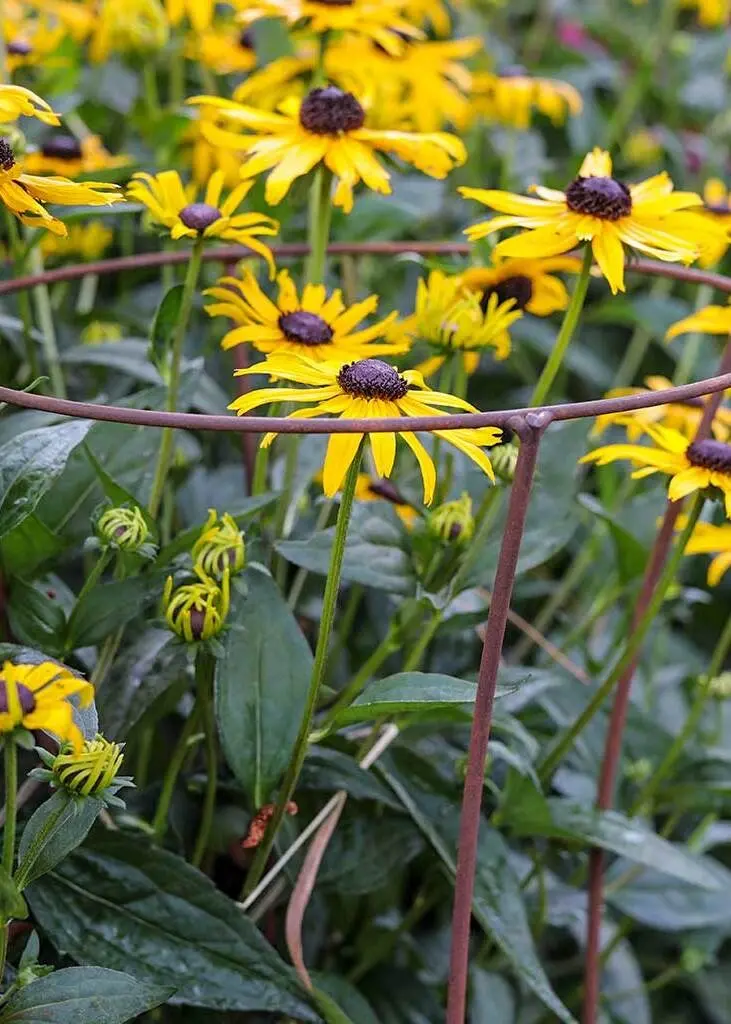
"If possible, try and use metal hoops or stakes, rather than bamboo canes, as these support the plants better. Rusted color supports work really well because they disappear into the foliage."
5. Replenish Containers
As the heat of the summer intensifies and early annuals start to fade, container gardens can start to look a little lackluster. However, the addition of a new plant or two can soon revitalize them.
New York-based landscape designer Kat Aul Cervoni replenishes her summer planters in a few ways. ''Swapping in one large, eye-catching plant like a lush fern can instantly refresh an arrangement," says Kat. "It draws attention away from anything that's looking a little tired.
"Alternatively, you could tuck a few seasonal plants, like Euphorbia, into empty pockets, or add some oomph with a new spiller that trails over the edges. Dichondra or creeping jenny are my 'go-to."
6. Sow New Annuals
A mid-summer reset is not just about instant transformation; some gardening jobs done now can see you through til fall. It's not too late to sow seeds or plant plugs in flower beds or pots for a later show of pretty annuals.
Gardener and author of Month-by-Month Gardening New York, Kate Copsey, likes to do this in July. "A few quick-growing annuals such as calendula and zinnias can still be sown in the first few days of July for late-summer bloom," says Kate. "Six-packs of common annuals such as marigolds and petunias are still for sale and are great for filling in those extra little gaps from spring-blooming flowers or to fill out a container with some summer color.
"To keep annuals blooming well all summer, they need to be deadheaded. For most annuals, the dead flowers can be pinched off with just your thumb and finger. Many annuals such as zinnias flower more profusely when they are kept picked."
7. Move Large Garden Toys
With hotter summers becoming the norm for most parts of the world and water shortages becoming more frequent, many people have decided that lawns are outdated. However, those who have kids may understandably still want them to be able to play on grass.
If that's the case and you still have a lawn, it's a good idea to not let large garden toys stay in one place for too long, if you want your grass to stay healthy.
"Move garden toys, such as kiddie paddling pools and slip-and-slide water toys, around the lawn every few days or weekly during summer," says Kate Copsey.
"The constant jumping on the slide, the weight of the pool, and wet feet running over the surrounding grass are not things that a lawn appreciates for long. Additionally, the grass under larger toys needs light to grow."
Of course, sweeping patios clear of leaves and debris, and cleaning up any spillages after entertaining outside is a given. Combined with the advice above, these steps will refresh your outdoor space, so it can continue to provide a beautiful backdrop for summer fun.