


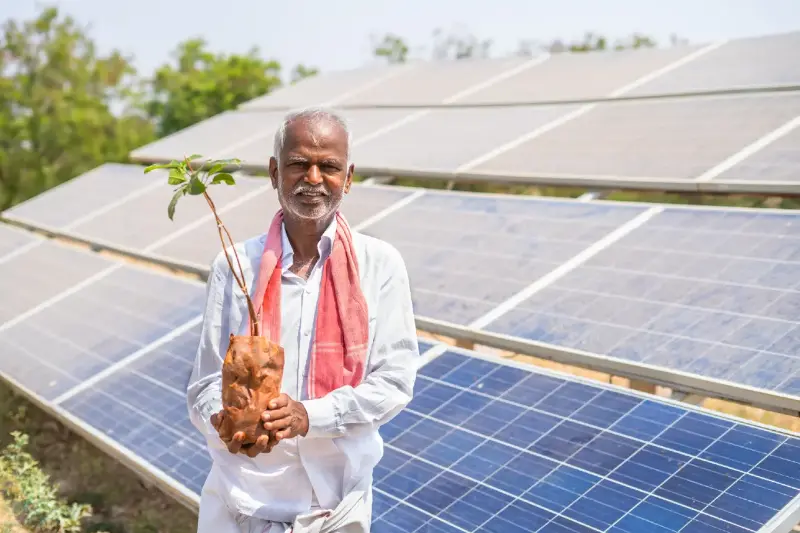
In an era defined by the race for clean, sustainable energy, India has vaulted ahead on the global stage. Recent data reveals that India has overtaken Japan to become the world's third-largest solar energy producer—a monumental achievement that underscores the country’s rapid commitment to green growth. This seismic shift isn’t just a number; it’s a story of innovation, aspiration, and an unyielding resolve to light up the future while respecting the planet.
A Bright New Dawn: India’s Solar Surge
India’s ascendancy didn’t happen overnight. Over the past decade, the country has embarked on an aggressive solar revolution, transforming arid plains and rooftops into bustling hubs of photovoltaic activity. According to the International Energy Agency (IEA), India's installed solar power capacity reached a whopping 81.8 GW in early 2024, outpacing Japan’s 78 GW and putting India behind only China and the United States.
Such growth is nothing short of extraordinary. In 2014, India’s solar capacity languished at less than 3 GW. The tenfold increase in less than a decade is a testament to both technological progress and robust policy infrastructure. Government initiatives—such as the Jawaharlal Nehru National Solar Mission—have incentivised investment, streamlined regulations, and powered up both urban and rural landscapes.
Sun-Powered Feats: What Sets India Apart?
India’s solar journey is defined by more than just numbers. Here’s what makes it unique:
- Scale and Ambition: India’s vast geography means abundant solar potential—the country receives over 3,000 hours of sunshine annually.
- Innovative Projects: The massive Bhadla Solar Park in Rajasthan, sprawling over 14,000 acres, is now the world’s largest contiguous solar installation, with a capacity of 2.25 GW.
- Grassroots Initiatives: Off-grid solar solutions have electrified remote villages, bringing light to over 18,000 previously dark settlements.
- Affordability: Competitive auctions and local manufacturing have helped bring down the cost of solar energy, making it one of the cheapest sources of power in India.
The government’s ambitious target of 280 GW from solar by 2030 tells us that the journey is only just beginning.
Ripples Around the World: Global Energy Implications
When one of the world’s most populous nations bets big on renewables, the ramifications are global. India’s solar surge has led to:
- Lower Emissions: India avoided over 70 million tonnes of CO2 emissions in 2023 thanks to solar adoption—a crucial step towards global climate commitments.
- Tech Boom: The solar revolution has spurred growth in India’s manufacturing sector, with domestic companies now producing everything from ultra-efficient panels to storage batteries.
- International Partnerships: From joint investments with the UAE to knowledge-sharing with Germany, India is both a contributor and a beneficiary in the world’s clean energy ecosystem.
This transformative movement is nudging other developing economies to follow suit, planting seeds of hope far beyond India’s borders.
Challenges and the Road Ahead: Clouds on the Horizon
Despite phenomenal progress, India’s solar journey is not without its hurdles. Intermittent generation, weak grid infrastructure, and land acquisition struggles present formidable challenges. Ensuring 24/7 power—especially when the sun doesn’t shine—will require continued investment in storage technologies and smarter grids.
However, innovators are rising to the task. Start-ups and research institutions across India are now developing solutions like floating solar plants, bifacial panels, and solar-wind hybrids, promising to overcome many of today’s obstacles.
When we look at the horizon, the promise is electrifying, but so too are the questions. Will India meet its towering 2030 target? Can it fully bridge the urban-rural energy divide? What lessons will the world glean from India’s bold embrace of the sun?
As the panels soak up the day’s last rays, one fact remains clear: the nation once known for its monsoons is now equally famous for its sunlight. The world is watching, waiting, and perhaps—drawing inspiration for its own green revolutions.