


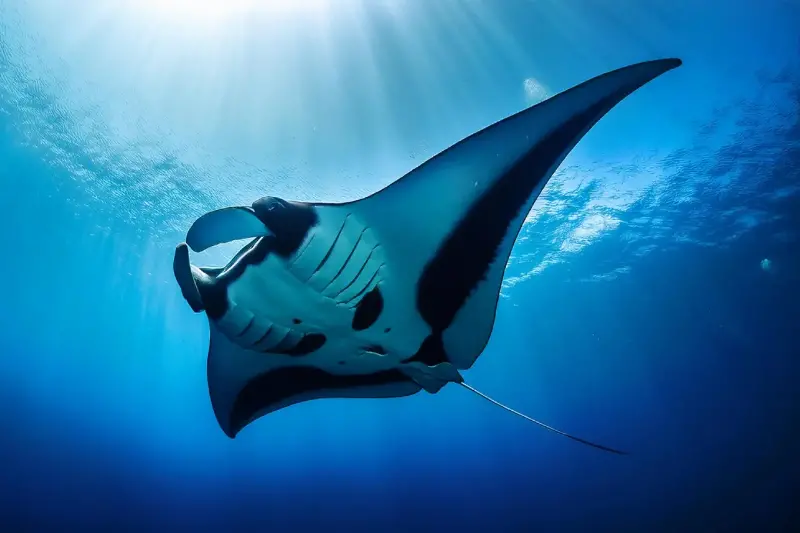
Few spectacles beneath the waves are as mesmerising as manta rays soaring through the ocean’s blue expanse. These majestic creatures, affectionately called “gentle giants,” captivate scientists, divers, and ocean-lovers everywhere with their sheer size, intelligence, and effortless grace. Yet, despite their popularity, much about mantas remains mysterious. What makes them so extraordinary? And why do they deserve a special place in both our imagination and conservation efforts?
A Marvel of Marine Design
Manta rays, belonging to the genus Mobula, include two main species—the reef manta ray (Mobula alfredi) and the giant manta ray (Mobula birostris). These giants can stretch up to an astounding 7 metres from wingtip to wingtip, making them the largest rays in the ocean. Despite this impressive size, mantas glide silently and elegantly, seemingly weightless as they fly through the sea.
Their triangular pectoral fins look like wings, and with each measured movement, they appear almost to dance underwater. Unlike their distant cousins, the stingrays, mantas have no stinging barb, making them harmless to humans and embodying the spirit of ocean tranquillity. Their presence often brings a sense of awe and calm to those lucky enough to witness them in the wild.
Brains That Rival Their Size
It’s not just their imposing figures that set mantas apart—these animals are among the smartest fish on the planet. Manta rays have the largest brain-to-body ratio of any living fish. Recent research even suggests they might recognise themselves in mirrors, a rare trait linked to self-awareness.
These cognitive abilities show in their inquisitiveness and social behaviours. Divers frequently describe encounters where mantas seem to seek interaction, circling and making eye contact. Such intelligence inspires a deeper respect for them as sentient beings of the deep, not just spectacles to be admired.
Feeding Ballets and Hidden Habits
Watching a manta feed is like seeing a ballet in slow motion. Mantas are filter feeders, swooping through the water with wide-open mouths to scoop up plankton, tiny fish, and crustaceans. They sometimes perform “barrel rolls,” spinning gracefully to maximise their intake in plankton-rich currents.
Key feeding facts:
- Manta rays consume up to 13% of their body weight in food each week.
- Their distinctive gill rakers filter microscopic prey efficiently.
- Despite their size, mantas rely on rich upwellings, making them vulnerable to changes in ocean health.
Their feeding frenzies often attract shoals of fish and trailing remoras, turning each meal into a mesmerising spectacle of marine life interaction.
Vulnerable Voyagers
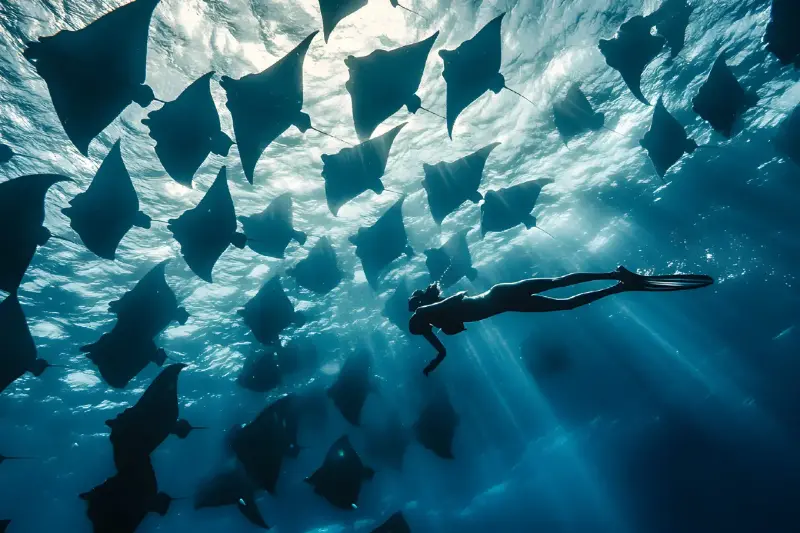
Sadly, mantas’ very majesty puts them at risk. Increasingly, these animals face threats from fishing (mostly for their gill plates used in dubious medicinal practices), entanglement in nets, pollution, and habitat degradation. With slow reproductive rates—females give birth to a single pup every two to three years—their populations struggle to rebound from human pressures.
A glance at their plight:
- Both major manta species are listed as “Vulnerable” by the IUCN.
- International trade in mantas is now regulated under CITES to protect dwindling populations.
- Leading tourist destinations, such as the Maldives and Indonesia, are turning to eco-tourism as a way to promote manta conservation.
Their survival now depends on conscious human action—a stark reminder that our fate is intertwined with these elegant drifters.
As the sunken world of mantas slips ever further out of ordinary reach, their story sparks questions and dreams for anyone drawn to the ocean’s mysteries. What other secrets might these gentle giants hold? And, as stewards of the blue planet, how can we better adapt to nurture and protect creatures whose silent beauty teaches us so much about grace, resilience, and the need for harmony in the world beneath the waves?