



For centuries, beavers have both fascinated and perplexed people living near rivers and streams. These industrious rodents are far more than just furry denizens of the forest; they are master engineers, capable of sculpting waterways, transforming landscapes, and influencing entire ecosystems. But how exactly do these marvellous mammals build dams—and what happens to rivers when beavers move in?
Anatomy of Nature’s Master Builders
Beavers, equipped with powerful jaws, razor-sharp incisor teeth, and large, webbed feet, are perfectly built for both land and aquatic construction. Their teeth, which never stop growing, are ideally suited to gnawing through wood—a skill they wield with astonishing efficiency. Once a tree is felled, the beaver’s broad, flat tail helps ferry branches and mud to the building site.
It’s a unique combination of instinct, anatomy, and sheer determination that enables beavers to effortlessly reshape their environment.
Why Build a Dam at All?
You might wonder: why invest the time and effort? For beavers, dam building is crucial for survival. By damming streams, they create deep ponds that:
- Protect them from predators, as the deep water provides an escape route.
- Offer a stable environment for building their lodge—the underwater home where they raise their young.
- Ensure a supply of food, with stored branches and bark submerged and preserved for winter.
But beyond these personal reasons, additional ecological magic unfolds wherever beavers choose to build.
From Simple Sticks to Strategic Masterpieces
Dams start surprisingly simply. First, beavers gather fallen branches, rocks, and mud. They place these materials across a stream, strategically layering and interlocking them just as a bricklayer would build a wall. Water flows are slowed, allowing sediments to settle and enhancing the dam’s stability.
Over time, some dams reach mind-boggling lengths. The largest beaver dam recorded—spied from satellite imagery in Canada’s Wood Buffalo National Park—stretches over 850 metres, and is visible from space!
Key steps in beaver dam construction typically include:
- Felling nearby trees and saplings.
- Dragging wood, rocks, and mud to the site.
- Assembling the dam’s base layer, anchoring key branches.
- Sealing gaps with mud and foliage to reduce leaks.
- Regular maintenance—beavers are tireless, constantly repairing and reinforcing their structures.
Their dedication turns a chaotic stream into a controlled oasis, often within just a few nights.
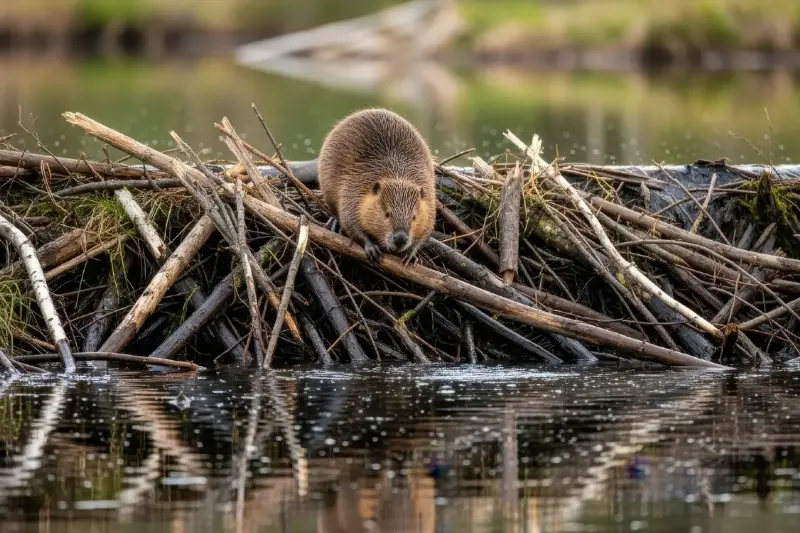
Ripple Effects: How Dams Change Rivers and Landscapes
When a beaver finishes its dam, the impact ripples far beyond the pond’s edge. Water that once flowed unimpeded now pools, transforming dry meadows into wetlands teeming with life.
Some headline impacts of beaver dams include:
- Creation of wetland habitats, attracting amphibians, waterfowl, fish, and countless insects.
- Reduced flood risk downstream, as dams slow water surge during heavy rains.
- Filtration and improvement of water quality, with sediment and pollutants trapped behind the dam.
- Enhanced groundwater recharge, as pooled water seeps into aquifers.
However, not everyone welcomes this change: farmers and landowners sometimes find their fields flooded, or infrastructure threatened. In these situations, wildlife specialists often intervene to balance human needs with nature’s ingenuity.
A Footprint Written in Water
Whether lauded as environmental heroes or labelled as pests, beavers are among the few wild creatures whose work is visible from space and dramatically alters the environment for centuries. Their dams not only protect their own families, but nurture entire landscapes for countless other species.
We are left to wonder: In an age of climate change and habitat loss, could embracing the beaver’s engineering help us rebuild and rewild parts of our world? Perhaps the next time you pass a quiet pond or a flooded field, you’ll glimpse the legacy of these powerful, persistent creatures—and ponder what wild wonders still await discovery.