


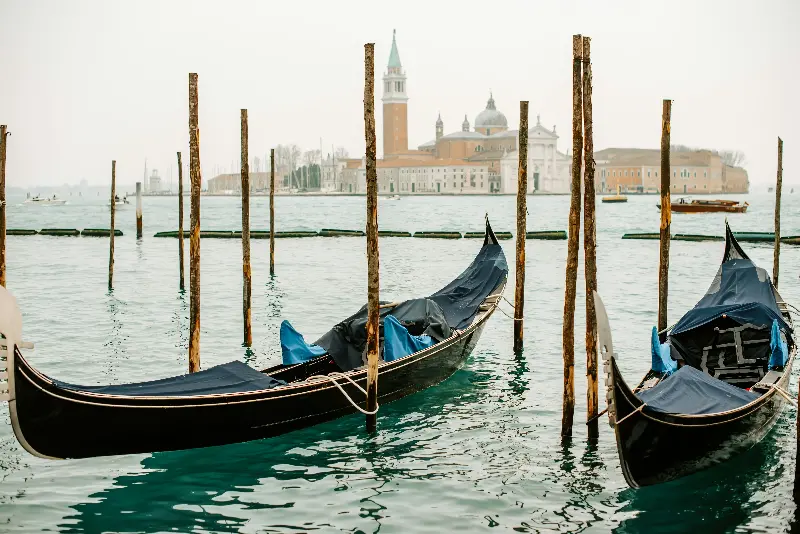
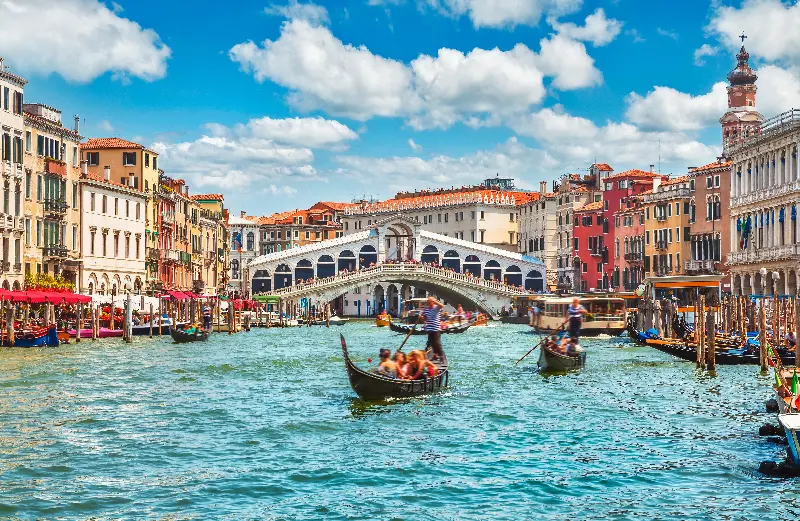
There is a moment in Venice when you stop in your tracks, captivated by the gentle sway of the water and the haunting call of a gondolier echoing in the distance. The city’s legendary canals are its liquid streets, weaving stories of centuries past. While vaporetti (water buses) and sleek modern motorboats zip along the Grand Canal, only the humble gondola preserves the city’s old-world magic, inviting you to become part of a timeless ballet upon the water.
THE ENDURING ALLURE OF VENICE’S CANALS
Venice is unlike any other place in Europe—a miracle city built upon wooden stakes and held afloat by engineering genius and a dash of mystery. The canals, numbering over 150 and spanned by more than 400 bridges, serve as both lifelines and labyrinths. Unlike the perfectly ordered grid of modern cities, Venice is a deliberate maze. Getting lost here isn’t only inevitable; it’s essential.
Wandering these winding waterways by gondola allows travelers to discover corners of the city that those on foot often miss:
- Flower-clad balconies hanging precariously over the water.
- Secret gardens hidden behind high brick walls.
- Marble saints guarding centuries-old doorways.
- Softly rippling laundry lines strung high above the narrowest channels.
As gondolas glide beneath bridges that once carried masked nobles and merchant princes, visitors feel a direct connection to the living history that saturates the Venetian air.
THE GONDOLA: VENICE’S FLOATING TIME CAPSULE
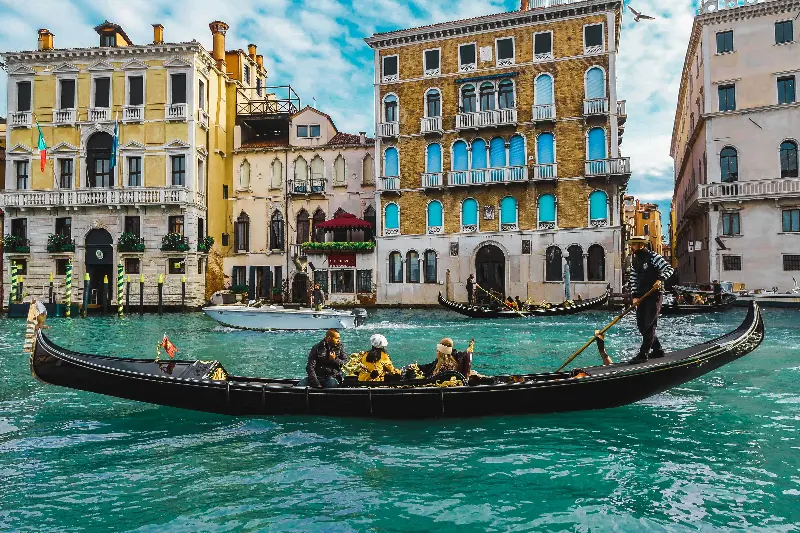
The gondola’s story is woven into the very fabric of Venetian life. In the 17th and 18th centuries, these vessels were the primary mode of transport, with nearly 10,000 clogging the waterways. Today, around 400 remain, all strictly regulated and handmade by skilled craftsmen known as squerarioli.
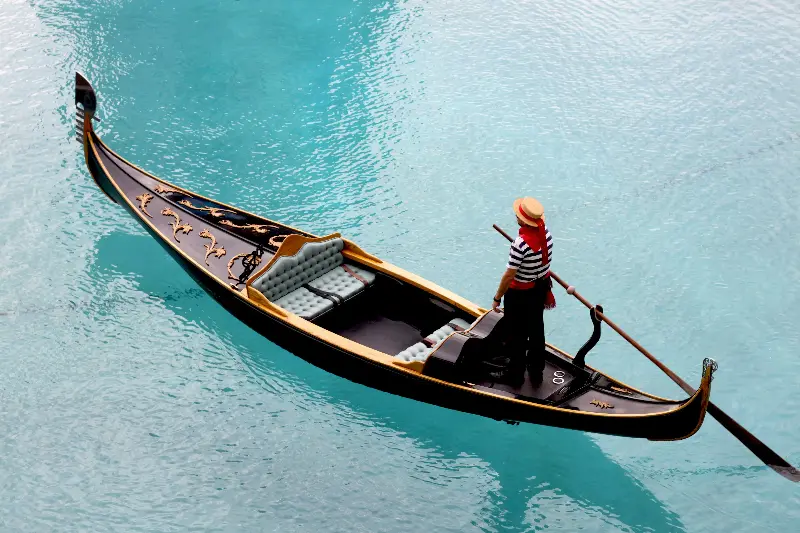
Each gondola is a masterpiece of asymmetrical design, built using eight distinct types of wood: oak, fir, cherry, larch, walnut, lime, mahogany, and elm. This asymmetry ensures the boat cuts smoothly through tight channels even with the force of a single oar. The signature black lacquer, once a requirement of 16th-century sumptuary laws to curb the extravagant displays of the wealthy, is now a symbol of Venetian elegance.
The iron prow, or ferro, is more than just decoration. Its symbolic features represent the city itself:
- The "S" shape mimics the curves of the Grand Canal.
- The six "teeth" represent the six sestieri (districts) of Venice.
- The single tooth facing backward represents the island of Giudecca.
GONDOLIERS: KEEPERS OF TRADITION AND GUARDIANS OF ROMANCE
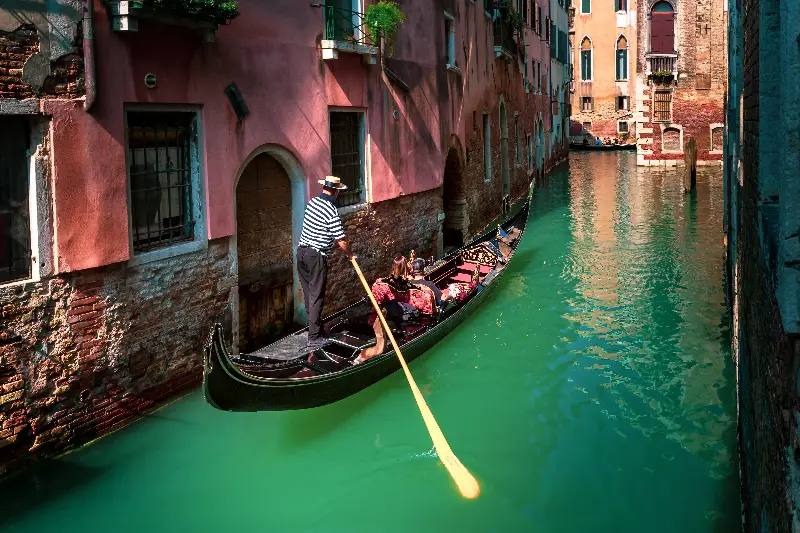
Becoming a gondolier is a feat of immense dedication. The guild is incredibly exclusive; hopefuls train for years and must pass rigorous exams in navigation, foreign languages, and Venetian history. This tradition is often passed down through generations, making the gondolier a true "poet of the canals."
Dressed in their iconic striped shirts and straw hats, they are the city's natural storytellers. In 2010, Giorgia Boscolo became the first licensed female gondolier, proving that even the most sacred customs can evolve while still honoring their roots. Whether they are singing traditional barcarolles or sharing the secrets of a crumbling facade, they are the heartbeat of the Venetian experience.
A JOURNEY THROUGH TIME: SIGHTS SEEN ONLY FROM THE WATER
While the Grand Canal dazzles with massive palazzos, it is the network of lesser-traveled rios that reveals Venice’s softer side. From the low vantage point of a gondola, you see details invisible from the sidewalk:
- The Bridge of Sighs: Where legend says prisoners glimpsed Venice for the last time.
- Hidden Frescoes: Peeling paint revealing glimpses of Renaissance artistry.
- The Jewish Ghetto: Quiet canals lined with stories of resilience and community.
At sunset, when the city is bathed in golden light and the only sound is the gentle dip of the oar, the centuries seem to fall away.
WHY GONDOLAS ENDURE TODAY
In a world hurtling toward modernity, gondolas stand as living symbols of Venice’s ability to hold onto wonder. They are a sacred thread tying the past to the present. For the traveler, a gondola ride is not merely a tourist rite—it’s a rare passage into the soul of a city that has stood for more than 1,200 years.
Getting lost in the streets is an adventure, but drifting through the canals is pure enchantment. It serves as a reminder that sometimes, the slowest journey is the one that lingers longest in the memory.