


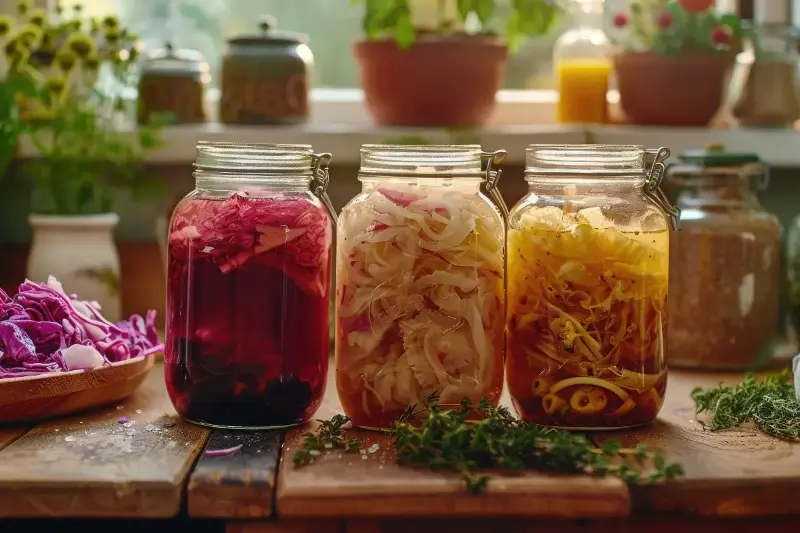
Fermentation is one of the oldest culinary techniques in the world, yet it feels surprisingly modern. Long before refrigeration existed, people discovered that beneficial microbes could transform fresh produce into tangy, long-lasting kitchen staples. Sauerkraut, yogurt, kimchi, kefir, sourdough, and pickles all rely on this natural process.
With a few basic tools and mindful habits, home cooks can easily create probiotic-rich foods that are flavorful, affordable, and deeply satisfying.
At its core, fermentation occurs when friendly bacteria or yeasts consume natural sugars in food, producing beneficial acids and gases. In vegetable ferments, lactic acid bacteria are the stars. They convert natural sugars into lactic acid, creating a characteristic sour flavor while naturally preserving the food for months without needing added vinegar.
Why Homemade Fermented Foods Are Worth Making
Homemade ferments offer far more than a bright, complex taste profile. They provide a range of everyday wellness and culinary benefits:
- Gut Health Support: Many ferments contain live microorganisms, often called probiotics, which nourish a diverse gut microbiome when enjoyed as part of a balanced diet.
- Enhanced Digestibility: Fermentation breaks down complex components. For instance, bacteria in yogurt break down part of its lactose, making it gentler on sensitive stomachs.
- Vibrant Culinary Flavor: Fermented carrots turn crisp and gently sour, while homemade yogurt remains mild, creamy, and free from artificial thickeners. A spoonful of kimchi adds instant depth and brightness to grain bowls, eggs, or soups.
Note: Pasteurization and high heat kill beneficial microbes. To enjoy live cultures, choose unpasteurized foods or enjoy homemade ferments that have not been cooked after fermenting.
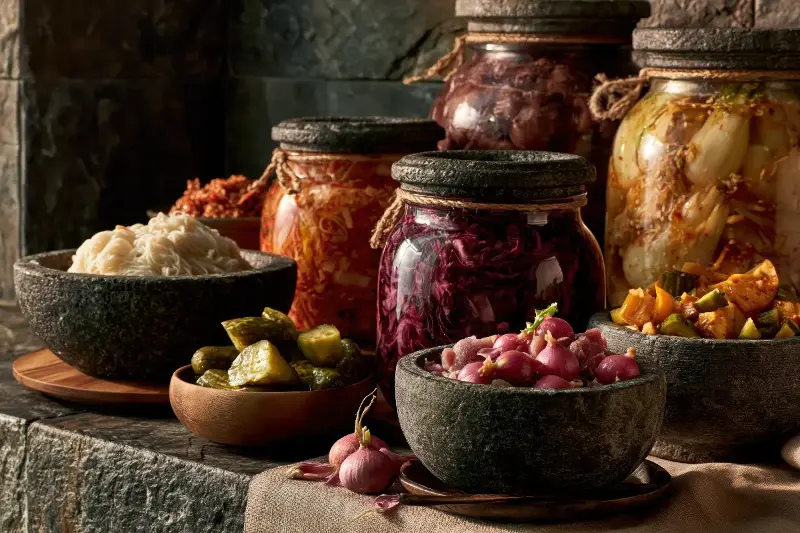
Essential Rules for Safe and Successful Fermentation
Achieving delicious, safe ferments does not require a sterile laboratory, but basic kitchen cleanliness and accurate measurements are essential:
- Maintain Good Hygiene: Wash hands, glass jars, and utensils thoroughly with hot, soapy water. Use fresh, firm produce without soft spots or signs of spoilage.
- Measure Salt Accurately: Salt draws moisture out of vegetables, preserves crispness, and encourages helpful lactic acid bacteria while discouraging unwanted microbes. A reliable benchmark for shredded vegetables is 2% salt by weight (20 grams of non-iodized salt per 1,000 grams of vegetables).
- Keep Produce Submerged: Exposure to oxygen is the primary cause of surface mold. Use fermentation weights or a clean glass object to keep vegetables entirely beneath the brine.
- Know What to Look For: Small bubbles, a pleasantly sour aroma, and cloudy brine are normal signs of active, healthy fermentation. If fuzzy mold appears in bright colors (black, blue, or orange), discard the batch.
A Simple First Project: Traditional Sauerkraut
Sauerkraut is the ultimate beginner-friendly ferment because it requires only cabbage, salt, a clean jar, and a little patience:
- Prep the Cabbage: Shred 1 kilogram of fresh green cabbage finely, reserving one clean outer leaf.
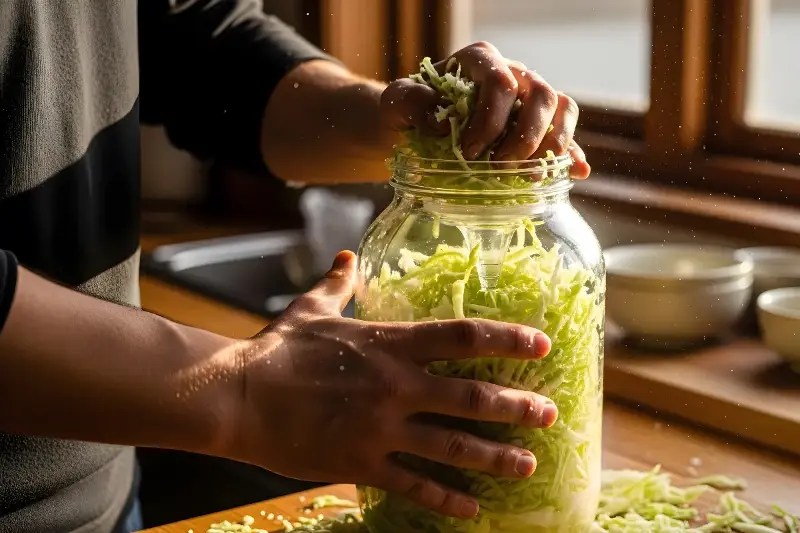
- Massage with Salt: Add 20 grams of salt. Massage the cabbage firmly for 5 to 10 minutes until it releases enough natural liquid to look glossy and juicy.
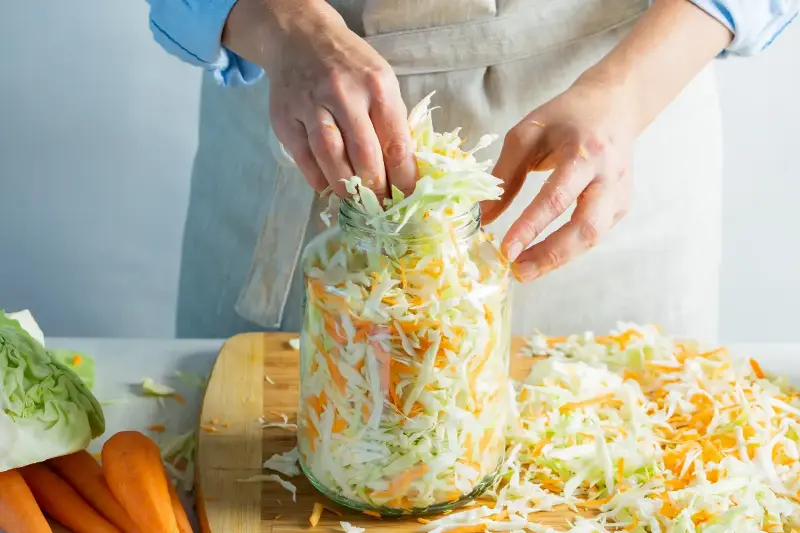
- Pack the Jar: Press the cabbage tightly into a clean glass jar, removing air pockets. The released liquid should rise above the cabbage. Place the reserved leaf and a weight on top to keep all pieces submerged.
- Ferment and Taste: Seal the jar loosely to allow natural gases to escape. Keep it at a cool room temperature (18 to 22 degrees Celsius) and taste after 5 to 7 days. Once it reaches your preferred level of tang, seal tightly and refrigerate.
Easy Ways to Enjoy Probiotic Foods Daily
Fermented foods work best as small, regular additions to your daily routine rather than drastic dietary shifts:
- Add as a Fresh Side: Place a forkful of crunchy sauerkraut beside roasted proteins, grain bowls, or baked potatoes.
- Enhance Sauces and Breakfasts: Stir plain yogurt into smoothies, dressings, or overnight oats for a creamy protein boost.
- Use as a Finishing Topping: To protect live active cultures, avoid high heat. Spoon yogurt over warm dishes right before serving, or add fresh kimchi to wraps and sandwiches at the very end.
Starting with one simple recipe allows you to build confidence and observe the process firsthand. With just a humble jar and a bit of time, you can transform simple garden vegetables into a delicious, nutrient-dense kitchen staple.