


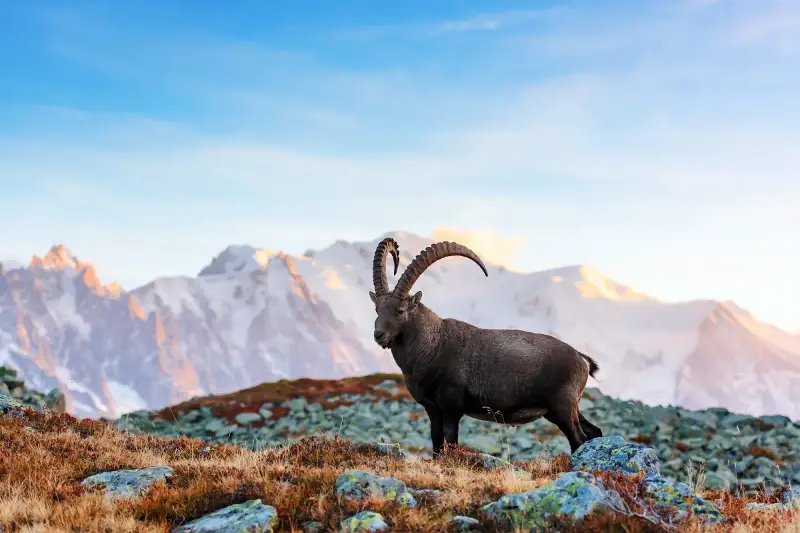
High above alpine valleys and desert canyons, ibex execute some of the most astonishing climbing displays in the animal kingdom. These wild goats can scale near-vertical rock faces, balance on ledges barely wider than a hoof, and move effortlessly across terrain that would stop most predators and humans alike. Their apparent fearlessness has made them enduring symbols of mountain resilience, yet their agility relies on highly specialized anatomy, sharp senses, and generations of evolution.
Ibex belong to the genus Capra, sharing close lineage with wild goats. Several species inhabit diverse regions across Europe, Africa, and Asia:
-
Alpine Ibex (Capra ibex): Native to the European Alps.
-
Nubian Ibex (Capra nubiana): Found in the arid deserts of North Africa and the Middle East.
-
Siberian Ibex (Capra sibirica): Inhabiting the massive ranges of Central Asia.
-
Walia Ibex (Capra walie): An endangered species endemic to the Simien Mountains of Ethiopia.
Built for the Vertical World
An ibex's hooves serve as its primary climbing gear. Each hoof features a hard outer rim that catches tiny ridges and cracks in the rock face. Inside lies a soft, rubbery pad that grips uneven stone and prevents slipping. When weight is applied, the split hoof spreads slightly to maximize surface contact.
Their physical frame provides incredible stability on sheer cliffs:
-
Compact bodies: Built with strong shoulders and muscular hind legs for sudden leaping power.
-
Low center of gravity: Enables swift side-to-side directional changes on narrow ledges.
-
Precise footing: They place each step with calculated accuracy rather than moving blindly.
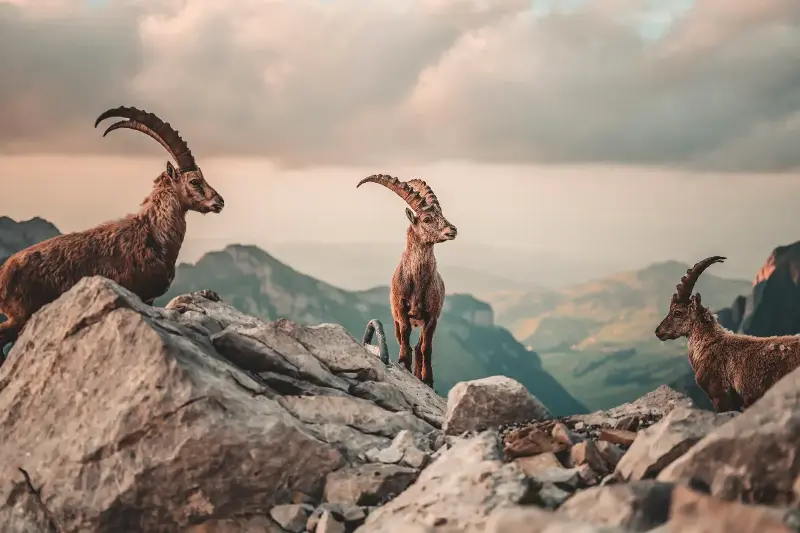
Cliffs as an Elevating Refuge
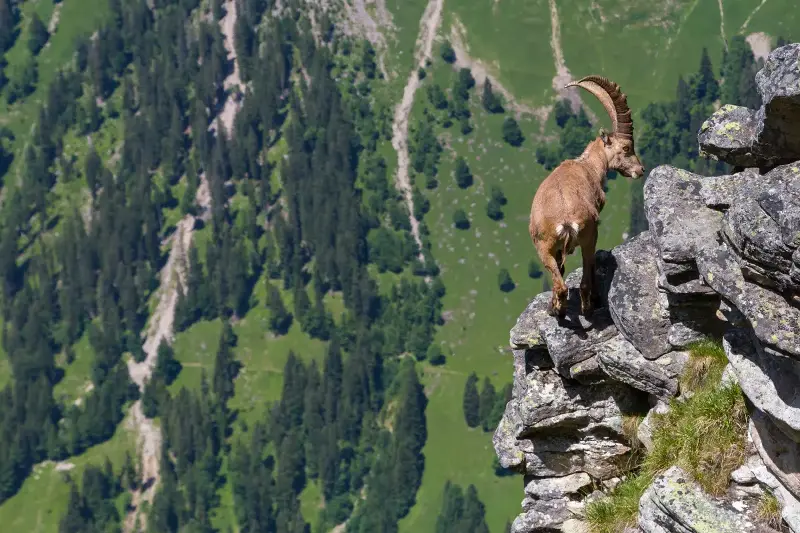
The precipitous cliffs chosen by ibex serve a fundamental function: protection. Steep terrain poses extreme danger to natural predators, allowing ibex to rest and graze on ledges where ground hunters cannot safely follow.
Young kids learn to navigate these slopes early by mimicking their mothers' movements. Interactive play—leaping and chasing on steep slopes—helps build the coordination required for survival. Beyond safety, sheer walls sometimes offer access to vital minerals. Ibex frequently scale high dam walls and steep masonry to access salt licks, essential for their internal fluid balance and muscle function.
A Triumph of Mountain Conservation
The story of the Alpine ibex stands as one of Europe's notable conservation successes. By the early nineteenth century, unsustainable hunting had reduced their numbers to a single remaining population in the Gran Paradiso region of northwestern Italy.
Through targeted reintroduction programs and legally protected reserves across Switzerland, France, Austria, and Germany, the species recovered significantly.
Male Alpine ibex are especially striking, featuring backwards-curving horns marked with pronounced ridges that can exceed one meter in length. Females possess smaller, slimmer horns. These structures play key roles in social hierarchy and territorial displays during the autumn breeding season.
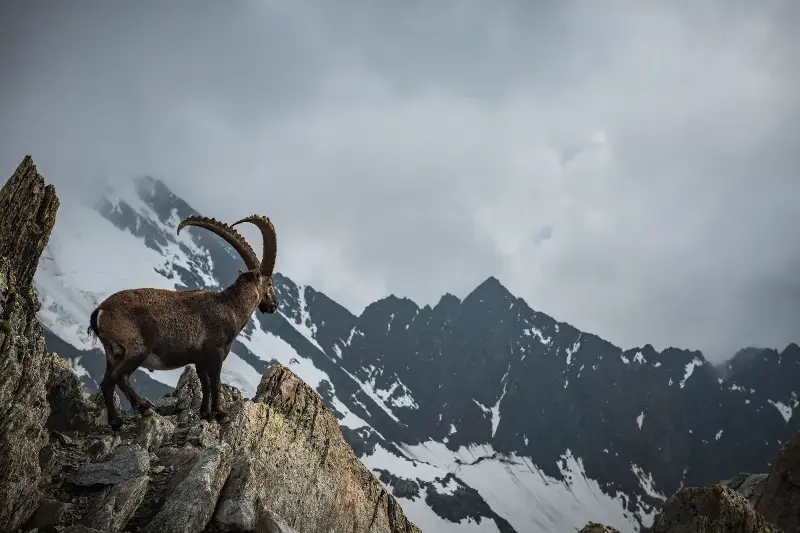
Adapting Across Diverse Ranges
Ibex species demonstrate unique adaptations tailored to their specific environments:
-
Desert Survival: Nubian ibex thrive in high-temperature environments across Egypt, Jordan, Israel, and Saudi Arabia. Their pale coats blend seamlessly into sunlit desert cliffs, and they rest during peak heat, foraging at dawn and dusk.
-
High-Altitude Isolation: Walia ibex endure inside the dramatic escarpments of Ethiopia's Simien Mountains National Park, reliant on concentrated protected zones.
-
Extreme Cold: Siberian ibex navigate vast mountain systems including the Himalayas and the Pamirs, enduring harsh winters, deep snow, and seasonal migrations across high plateaus.
What appears to human observers as an impossible feat of daring balance is, for an ibex, simply a calm and measured path across its natural home.