


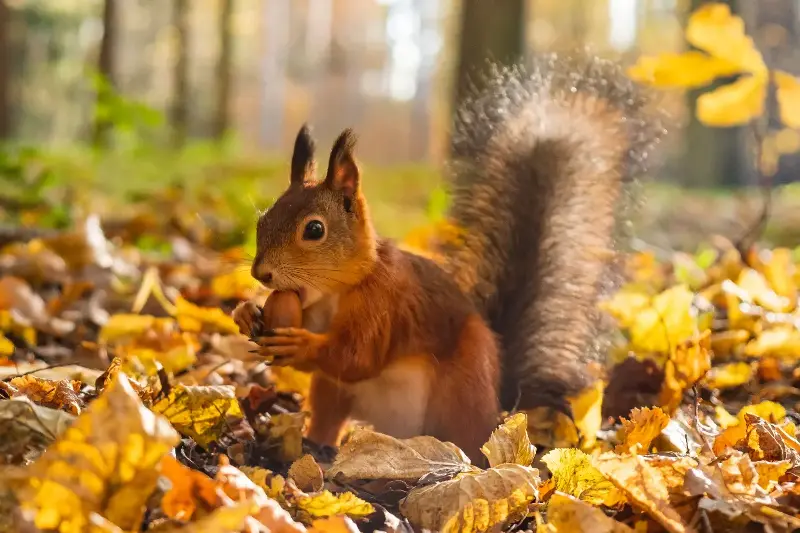
As the crisp air of autumn sweeps through forests and city parks, a particular group of small mammals springs into overdrive. With bushy tails flicking and swift paws, squirrels embark on one of nature’s most impressive annual rituals: preparing for the cold months ahead. While they often appear frantic, squirrels are actually master strategists and resourceful survivors. Let us take a closer look at how these remarkable creatures prepare for winter.
INSTINCTUAL PREPARATION FOR CHILLY MONTHS
Unlike many other animals, most squirrels do not hibernate. Instead, they must remain active and alert throughout the harshest winter days. Driven by an internal clock tuned by evolution, they begin their preparations the moment daylight wanes and temperatures drop.
- Relentless foraging: Squirrels turn into industrious workaholics, gathering a diverse mix of nuts, seeds, berries, and fungi.
- High energy investment: During a single autumn, a single squirrel may bury thousands of individual food items to ensure they stay fed all winter.
CLEVER CACHE: THE ART OF FOOD STORAGE
Squirrels are connoisseurs of food storage, primarily utilizing a technique known as “scatter hoarding.” Instead of keeping all their resources in one vulnerable spot, they distribute countless miniature pantries throughout their territory.
- Security through distribution: By creating hundreds or even thousands of caches, they ensure that if a predator or rival finds one, the rest of their supply remains safe.
- Deceptive caching: Squirrels are intelligent enough to use misdirection; they may pretend to bury a nut while being watched, only to stash it elsewhere once they are sure no one is looking.

ASTONISHING MEMORY AND SPATIAL SKILLS
It is truly fascinating how squirrels remember the precise location of their buried treasures. Despite having a small brain, they possess an incredible capacity for spatial recall.
- Landmark navigation: They use trees, rocks, and scents as markers to find their way back to specific caches.
- Spatial chunking: Squirrels often store nuts in organized clusters based on type and location, making it easier to retrieve the right food even when the ground is covered in snow.
- Ecological contribution: Forgotten nuts often sprout into new seedlings, playing a vital role in forest regeneration every spring.
QUALITY CONTROL EXPERTS
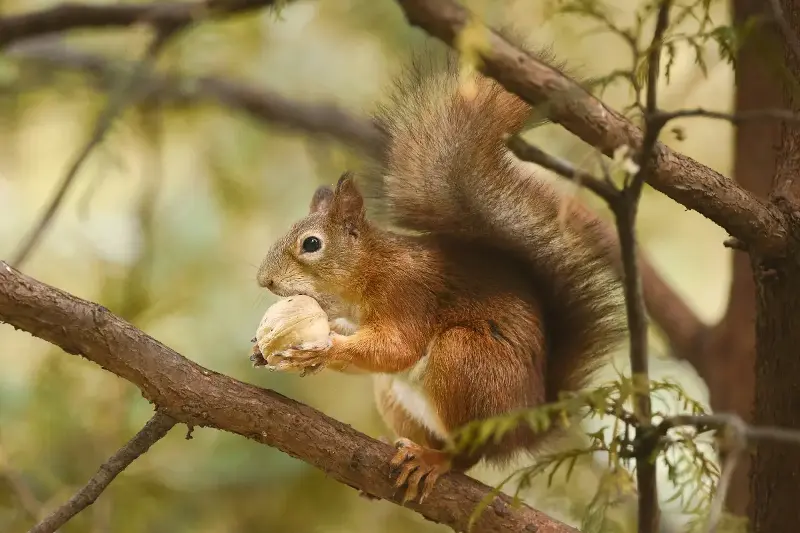
Squirrels do not just hoard any food they find; they are surprisingly picky. They use their sharp front teeth to evaluate the quality of a nut, ensuring only the healthiest specimens are stored.
- Food preservation: Squirrels often prepare their finds by removing the tips of acorns to stop them from sprouting, or hanging mushrooms in tree branches to dry.
- Calculated effort: This attention to detail ensures their hard-earned winter larders remain viable for months.
SURVIVING THE WINTER
Winter is a true test of endurance, but squirrels are prepared with more than just food. They utilize warm, insulated nests known as “dreys”, lined with leaves, moss, and fur.
- Active survival: On milder days, squirrels emerge to dig through snow, utilizing an incredible sense of smell to locate their caches beneath up to six inches of snow.
- Agility in the cold: Even in freezing temperatures, they remain agile, bounding between frost-laden branches with ease.
The squirrel is a brilliant example of adaptation and ingenuity. From their deceptive tricks to their map-like memory, they are masterful strategists. Next time you see a squirrel darting across the snow, remember that you are witnessing one of nature’s cleverest planners, surviving against the odds one nut at a time.