


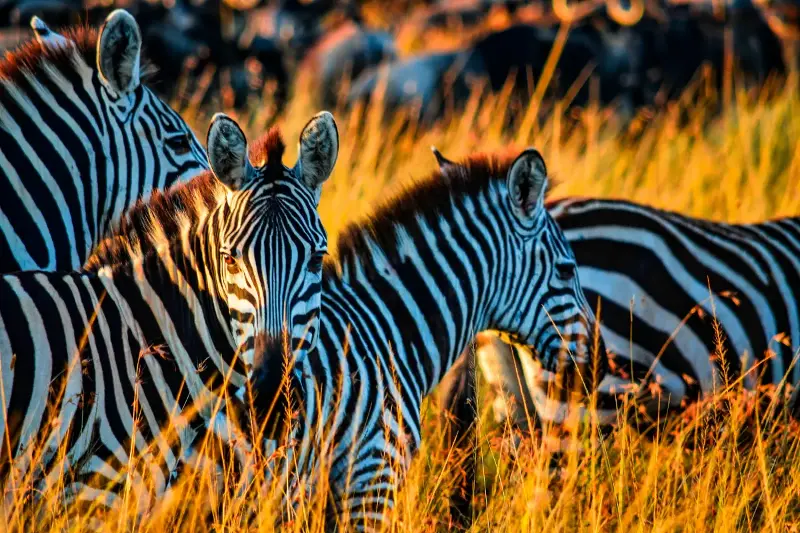
A zebra standing on an open savanna can look almost too dramatic to be real. Its bold black-and-white coat seems designed to attract attention rather than hide an animal that must avoid lions and other apex predators. Yet zebras have carried these extraordinary patterns through millions of years of natural selection. Each species possesses its own distinctive stripe style, and no two individual zebras have the exact same arrangement.
Scientists have long debated the ultimate evolutionary purpose of this remarkable coat. The answer is unlikely to be a single mechanism; instead, zebra stripes provide a multifunctional suit of biological advantages, ranging from deterring dangerous biting insects to facilitating social recognition.
More Than a Black-and-White Coat
There are three living zebra species: the Plains zebra, the Mountain zebra, and Grévy's zebra. Plains zebras display broad, bold stripes that wrap smoothly around the torso. Mountain zebras feature narrower striping with a distinct grid-like pattern over the rump. Grévy's zebras—the largest of the three—carry exceptionally fine, closely spaced lines.
- Natural Fingerprints: During embryonic development, pigment-producing cells spread across the skin in complex genetic patterns, creating a coat design as unique as a human fingerprint.
- Geographic Variations: In warmer, wetter regions, zebra populations display stronger, sharply defined stripes, whereas those in drier regions often show lighter or less extensive striping.
- Environmental Adaptation: These regional variations provide strong evidence that local environmental conditions actively shape coat characteristics.
The Insect Deterrent Advantage
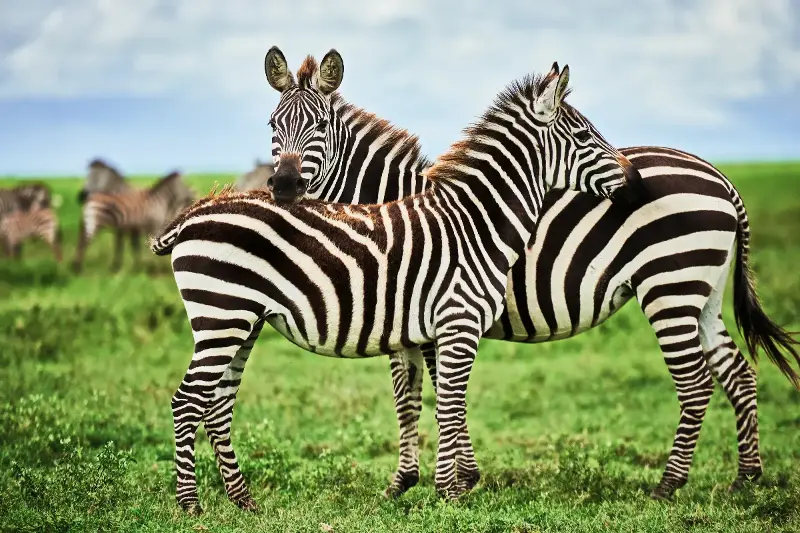
One of the strongest modern scientific theories involves protection against blood-feeding insects, such as horseflies and tsetse flies. In tropical African habitats, these pests carry hazardous parasites and viruses while causing painful bites that consume vital energy.
- Disrupted Landings: Behavioral experiments reveal that biting insects struggle to make controlled landings on striped surfaces compared to solid dark or light coats.
- Visual Confusion: A fly’s compound visual system processes motion, brightness, and distance differently; the high-contrast stripes create confusing visual signals that disrupt its approach.
- Habitat Correlation: Bold zebra striping is most pronounced in geographic regions where biting fly populations are densest, suggesting a direct evolutionary pressure.
Do Stripes Confuse Predators?
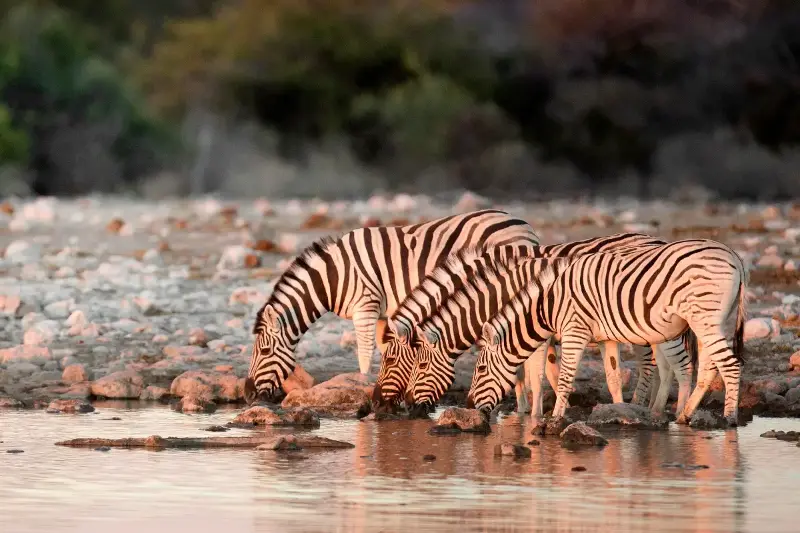
For decades, naturalists assumed stripes served primarily as camouflage. While a zebra stands out clearly to human eyes in broad daylight, predators like lions perceive the world differently, hunting mainly at dawn, dusk, or night when contrast and motion matter far more than color.
In tall grass or patchy shade, a zebra's outline breaks up visually. When a herd flees together, the chaotic pattern of moving lines creates motion dazzle, making it exceptionally difficult for a hunter to calculate an individual animal's precise speed, distance, and direction. Even a small survival advantage during a high-speed chase can prove decisive over generations.
Signals for Herd Life and Climate Management
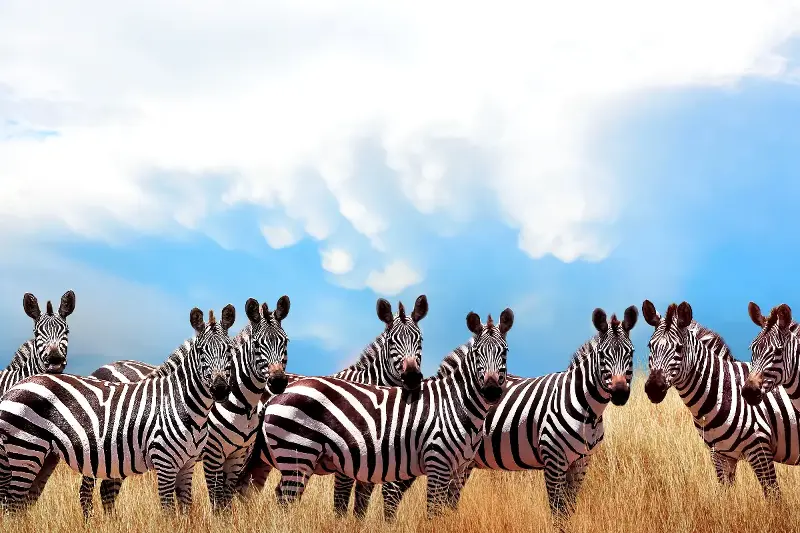
Zebras are highly social animals that rely on group cohesion for safety and daily life. Their individualized stripe patterns play an important role in herd communication and family bonding:
- Social Recognition: Mothers and foals use visual stripe cues alongside scent and vocalizations to identify one another instantly within a large herd.
- Group Coordination: Visual contrast helps young foals follow their mothers through tall grassland during low-light conditions.
- Thermal Regulation: Because dark stripes absorb more solar heat than white stripes, micro-air currents may form along the skin, assisting in heat management under the hot African sun.
Rather than serving a single purpose, the zebra's coat acts as a dynamic evolutionary toolkit—visually striking to humans, disorienting to pests, and essential for life on the open savanna.