



Gorgeous hair isn’t just about expensive salon treatments or the latest celebrity-endorsed products. The secrets of beautiful, strong, and shiny locks lie in the fascinating world of science—and a few simple, proven techniques. Whether you’re craving lush waves, glossy straight styles, or defined curls, the journey to your dream hair starts with understanding its biology and giving your strands exactly what they need.
THE BIOLOGY BEHIND BEAUTIFUL HAIR
At its core, hair is a remarkable structure made up mostly of a protein called keratin. Each strand is anchored in a follicle beneath your scalp, where it receives nutrients and oxygen to grow. While the visible part of the hair is technically "dead," its organization and protection determine its outward health.
- Genetics: These play a massive role in your hair’s thickness, growth rate, and curl pattern.
- Environmental Factors: Ultraviolet rays, pollution, and humidity can degrade the hair structure.
- Physical Stress: Heat styling and chemical treatments can damage the outer cuticle, leading to breakage and dullness.
PROTEIN AND MOISTURE: THE DYNAMIC DUO
Imagine your hair as a rope. Protein provides the structural integrity and strength, while moisture ensures flexibility and softness. A perfect balance between these two is essential for hair that doesn't just look good, but stays resilient.
Protein treatments—often featuring hydrolyzed keratin, wheat, or silk—repair the cuticle and reinforce weak areas. These are vital for hair that is:
- Chemically processed or color-treated.
- Prone to snapping or "mushy" when wet.
- High-porosity due to heat damage.
On the flip side, moisture is the key to elasticity and shine. While water is the ultimate hydrator, humectants like glycerin or honey help lock that water into the hair shaft. If your hair feels rough, tangles easily, or feels "straw-like" despite using protein, it is likely craving deep hydration.
THE MAGIC OF SCALP HEALTH
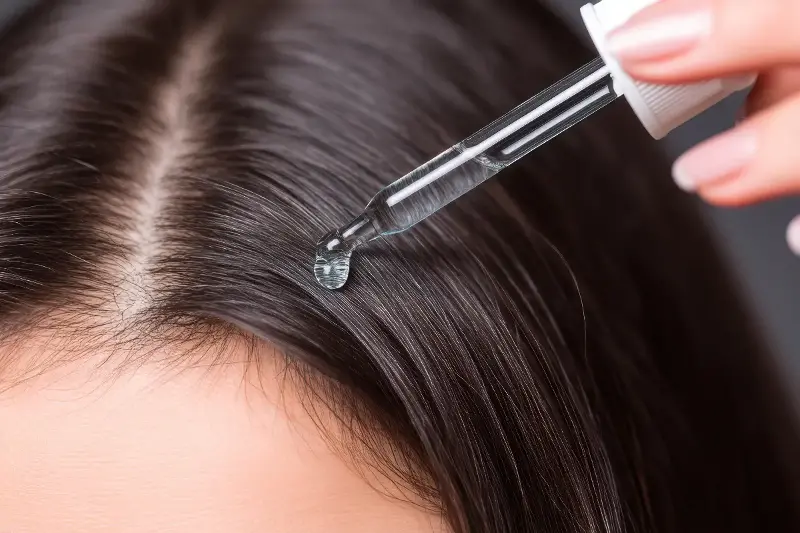
A healthy scalp is the "soil" from which beautiful hair grows. Science has shown that a balanced, nourished scalp leads to stronger, faster-growing hair. The scalp’s microbiome—an ecosystem of bacteria and fungi—is now a major focus in cutting-edge hair research. To nurture this environment, consider the following:
- Gentle Cleansing: Skip harsh sulfates that strip away natural oils.
- Exfoliation: Use a scalp scrub or salicylic acid treatment once a week to remove dead skin and product buildup.
- Circulation: Regular scalp massages improve blood flow, delivering vital nutrients to the follicles and potentially boosting thickness.
SHINE STARTS WITH THE CUTICLE
The outer cuticle consists of tiny scales that overlap like tiles on a roof. When these scales lay flat, they reflect light, creating a mirror-like shine. When the cuticle is lifted or damaged, hair looks dull and feels coarse. To keep the cuticle sealed, try these science-backed habits:
- Rinse with cool water: This helps "close" the cuticle after a warm shower.
- Avoid wet brushing: Hair is most fragile when wet; use a wide-tooth comb or a dedicated detangling .
- Heat Protection: Never use a flat iron without a heat protectant spray to prevent the protein in your hair from literally "cooking".
- Seal with Oils: Finishing with argan or jojoba oil can provide an instant gloss by smoothing the hair surface.

SMART NUTRITION FOR STRONGER STRANDS
Your hair needs a constant supply of vitamins and minerals to grow and repair itself. Science points to several critical nutrients for preventing shedding and promoting strength:
- Biotin and Vitamin D: Essential for the hair production cycle.
- Zinc and Iron: Critical for preventing thinning and brittleness.
- Healthy Fats: Omega-3s found in fish and nuts provide the oils that keep hair shiny.
Remember, hair is often a barometer for your overall health. Sudden shedding or a loss of luster can be the first sign of a nutritional deficiency or internal stress.
CUSTOMIZING YOUR ROUTINE FOR MAXIMUM IMPACT
No two heads of hair are identical, so customization is crucial. Research proves that using products tailored to your specific hair type—straight, wavy, curly, or coily—leads to significantly better results. Regular trims every 6–8 weeks are also necessary to prevent split ends from traveling up the hair shaft.
Don’t be afraid to experiment, but give new routines at least four weeks to show their full impact. Focus on the basics: gentle cleansing, consistent conditioning, and protection. Embracing your hair’s natural texture is the most effective secret of all. Beautiful hair isn’t about perfection—it’s about health, balance, and celebrating your individual style. By applying these principles of biology and nutrition, you can enjoy locks that are not only strong and shiny but uniquely yours.