


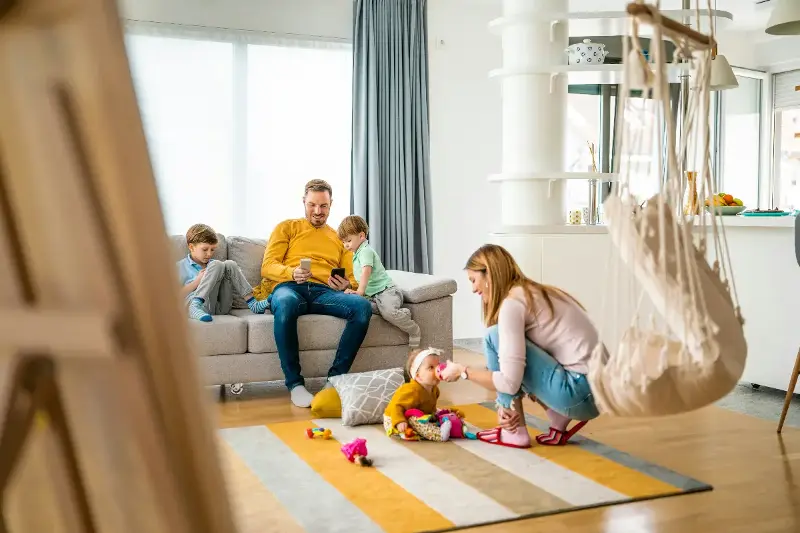
Shared parenting is not simply a 50–50 division of chores. It is a family approach in which both adults take meaningful responsibility for children’s care, emotional development, household planning, and decision-making. Whether parents live together, co-parent across two homes, or are supported by extended family, the principle is the same: children benefit when care is reliable, respectful, and shared.
Research consistently links involved parenting from more than one caregiver with positive outcomes for children. Young people tend to gain stronger communication skills, greater emotional security, and more confidence when they experience dependable support from both parents or parent figures. The benefit is not about perfection; it is about children seeing that the adults in their lives work as a team.
Equality starts with the invisible work
Many families divide visible tasks, such as cooking dinner or taking a child to football practice, while one person still carries the “mental load.” This includes remembering vaccination dates, noticing when shoes no longer fit, arranging childcare, monitoring school messages, and planning birthdays.
Equal parenting becomes more realistic when this unseen work is also recognised and shared. A practical approach is to assign ownership rather than occasional help. For example, one parent may be fully responsible for school communication for a term, while the other manages medical appointments and medication. Ownership means planning, remembering, and following through—not waiting to be asked.
Why children notice the difference
Children are sharp observers of family dynamics. When they see adults share responsibilities fairly, they receive an early lesson about respect, cooperation, and gender equality. This matters for both girls and boys, especially in societies where caregiving has traditionally been treated as one parent’s role. Shared parenting can help children by giving them:
- More opportunities for one-to-one connection with each parent
- Consistent routines and expectations across the household
- Different perspectives, skills, and forms of encouragement
- A healthier model for resolving disagreements
Reassurance that they are supported by a wider care network A parent who bathes a toddler, helps with homework, packs lunches, or listens after a difficult day is doing more than completing a task. They are building trust through repeated, ordinary moments.
Making teamwork work in real life
Equal does not always mean identical. Work schedules, health needs, breastfeeding, travel, and family finances can make an exact split impossible. The goal is fairness that reflects each family’s circumstances and is reviewed as those circumstances change. Try these practical habits:
- Hold a brief weekly family logistics meeting. Discuss schedules, expenses, school needs, and who is carrying too much.
- Use a shared calendar for appointments, activities, and deadlines. This reduces the need for one person to act as the household manager.
- Agree on core rules, such as bedtime, screen use, and discipline. Consistency helps children feel secure.
- Speak respectfully about the other parent, particularly after separation. Children should not feel pressured to choose sides.
- Make space for each adult’s rest and interests. Sustainable caregiving requires both parents to have time to recover and remain themselves.
The joy behind the organisation
Shared parenting is often discussed as a matter of fairness, but its most lasting value can be joy. When both adults feel capable and included, neither parent is reduced to a helper or left alone with every difficult decision. Each gets to know the child’s humour, fears, friendships, changing interests, and small daily triumphs. There will still be tired mornings, conflicting opinions, and unexpected disruptions. Yet a family built on shared responsibility has more than a practical advantage: it creates a culture in which care is something everyone contributes to. What might change in a family’s sense of connection if parenting were viewed not as a burden to divide, but as a relationship to build together?