



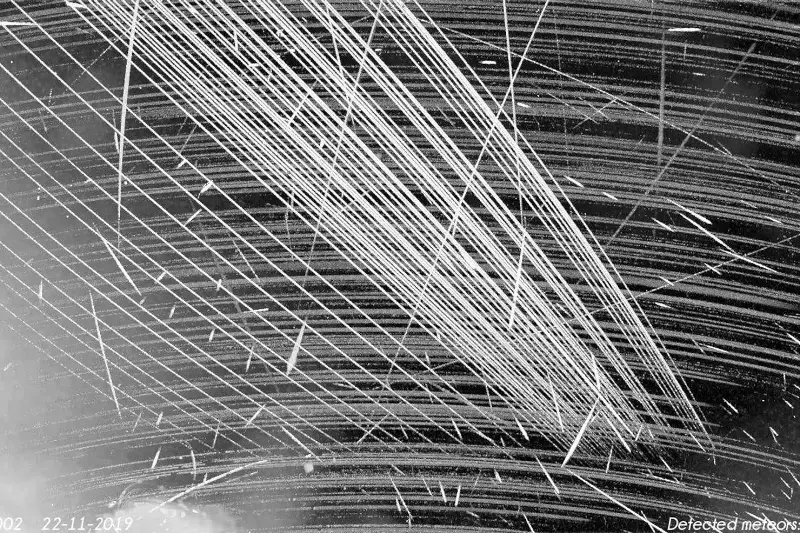
There are now more visible satellites in the night sky than observable stars above most UK towns, according to a study.
The analysis, carried out by precision engineering supplier Accu Components, tracked the trajectories of more than 15,000 active satellites orbiting earth below an altitude of 2,000 kilometres (1,200 miles) over seven nights in October.
It found that more than 700 satellites are crossing the sky at any moment of the night – more than the number of stars that are typically visible to the naked eye in areas with moderate light pollution.
“The night sky over the UK has changed more in the last seven years than in the previous sixty,” Accu Commponent’s report states.
“With more mega-constellations on the way, the number of satellites passing over the UK every night is only going to rise.”
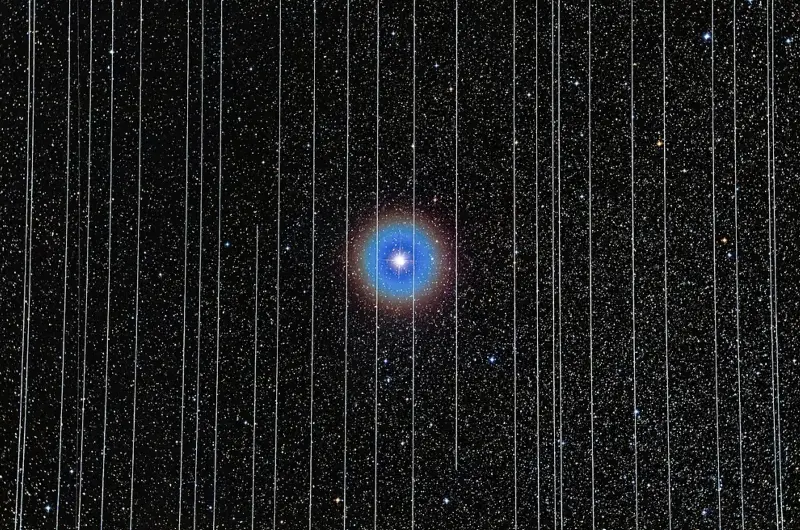
Across an entire night, approximately 13,000 different satellites pass over an average UK town, reflecting the rapid expansion of satellite networks in recent years.
Most notable is SpaceX’s Starlink space internet constellation, which accounts for more than two thirds of all active satellites in low-Earth orbit.
There are now more than 20,000 active satellites – up from just over 1,000 a decade ago – with a record 4,510 objects launched into space last year.
This year is set to break that record, with SpaceX boss Elon Musk applying to launch one million satellites over the coming years to serve as space-based AI data centres.
The growing number of satellites has raised concerns among astronomers, who warn that they are interfering with observations of the night sky.
Light trails from satellites can cross images taken by ground-based telescopes, obscuring stars, galaxies and other celestial objects.
“Artificial satellites around the Earth are a new form of light pollution,” Gáspár Bakos, a professor at the Department of Astrophysical Sciences at Princeton University, wrote on his site calling for people to sign a petition about the issue.
“Those on low-earth orbits can be especially bright. Companies plan to launch tens of thousands of such satellites, and our view of the night sky, constellations and the Milky Way may be entirely lost.”
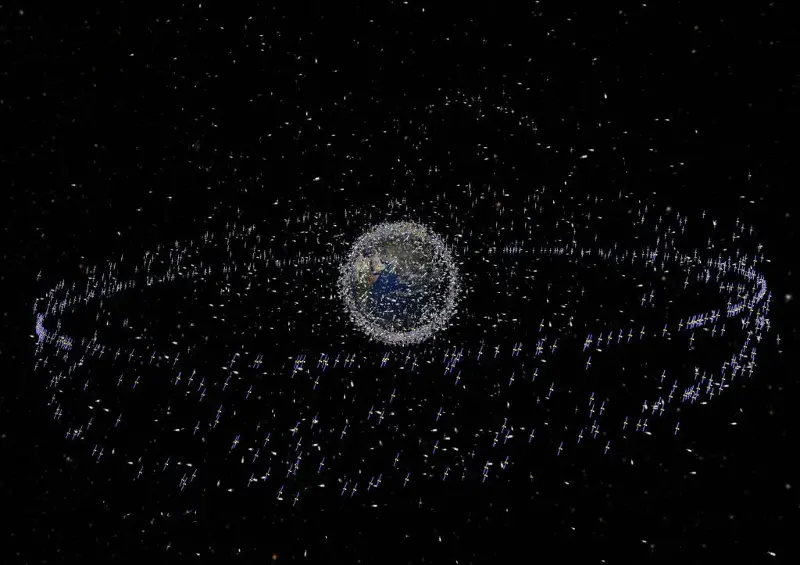
A separate study by the European Southern Observatory (ESO) this year found that plans to launch megaconstellations could have serious consequences for astronomy.
ESO researchers concluded that the total number of satellites in orbit should be limited to around 100,000.