



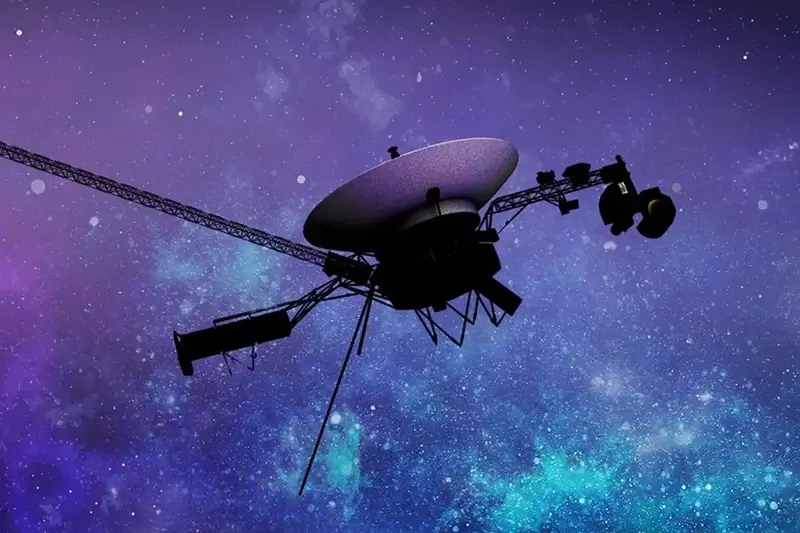
NASA’s Voyager 1 spacecraft has reached a distance of one light-day from Earth, becoming the first human-made probe to cross the landmark threshold deep within interstellar space.
Flight controllers received the transmission on Thursday, exactly 24 hours after it was sent by the probe. The radio signal traveled across more than 16 billion miles (26 billion kilometers) at the speed of light to complete the journey.
"Traveling a light-day is a singular feat for a spacecraft, but Voyager is so much more than a distant traveler," NASA’s Joe Westlake, the heliophysics division director, said in a statement.
Launched in 1977, the spacecraft has established multiple historical milestones.
It flew past Jupiter in 1979 and Saturn in 1980, captured the iconic distant photograph of Earth known as the "Pale Blue Dot" in 1990, became the most distant human-made object in 1998, and exited the sun’s sphere of influence into interstellar space in 2012.
NASA confirmed the record after the signal arrived at California's Jet Propulsion Laboratory, having already celebrated the occasion on social media the previous day with a message wishing followers a "Happy Voyager light-day … day!"
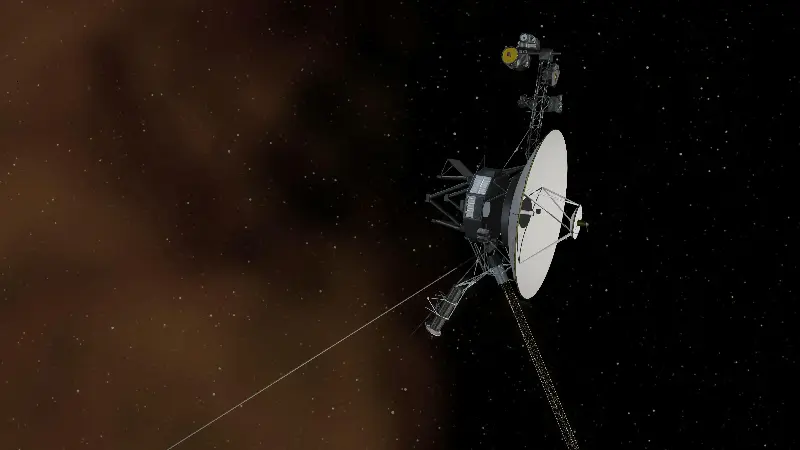
"Voyager 1 crossing the light-day threshold is yet another historic feat on an extraordinary voyage of discovery," JPL director Dave Gallagher said in a statement.
Voyager 1 and Voyager 2 are NASA’s longest-running space missions, continuing to send back information despite powering down most systems to prolong operations.
Although Voyager 2 launched two weeks earlier, its trajectory past Jupiter, Saturn, Uranus, and Neptune was longer and slower. It reached interstellar space in 2018 and is not expected to hit the one-light-day mark until 2035.
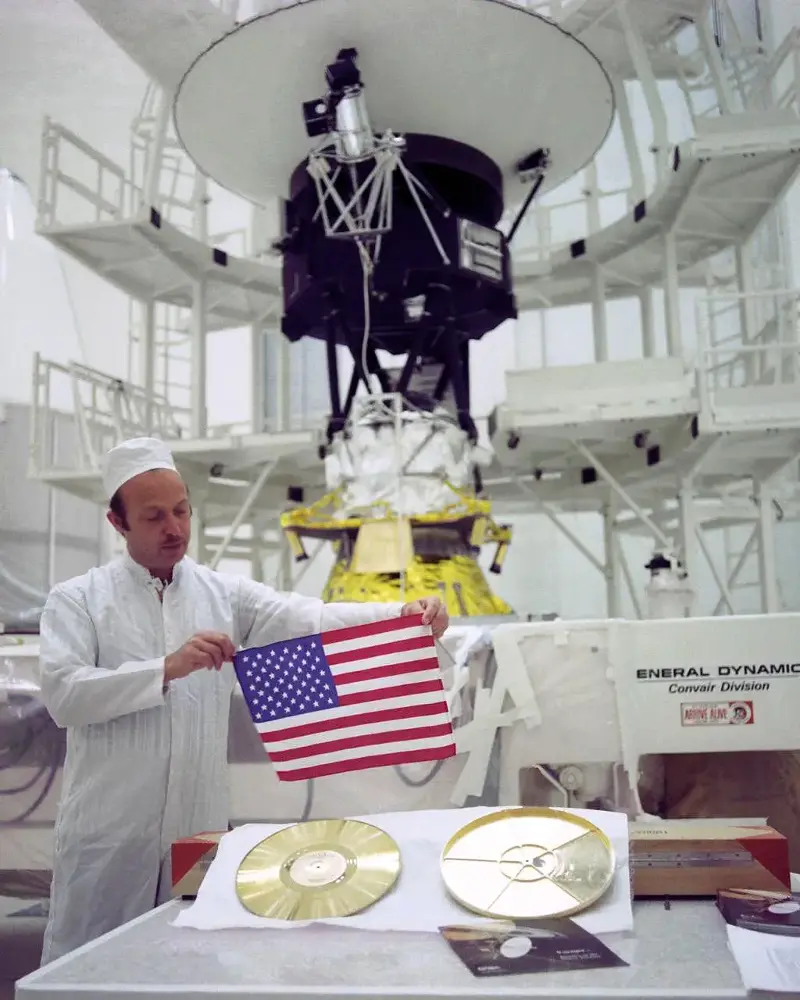
Powered by plutonium, both 49-year-old probes travel at 38,000 mph (61,000 kph). Cameras were turned off long ago, but they regularly transmit environmental data from unexplored space.
No science or engineering telemetry has come from Voyager 1 since Saturday, but its carrier signal allowed teams to verify the milestone while controllers investigate why the data flow stopped.
Both probes carry a Golden Record featuring Earth’s sounds, a project led by the late Cornell astronomer Carl Sagan, who coined the phrase "Pale Blue Dot." NASA expects these records to last over 1 billion years.