



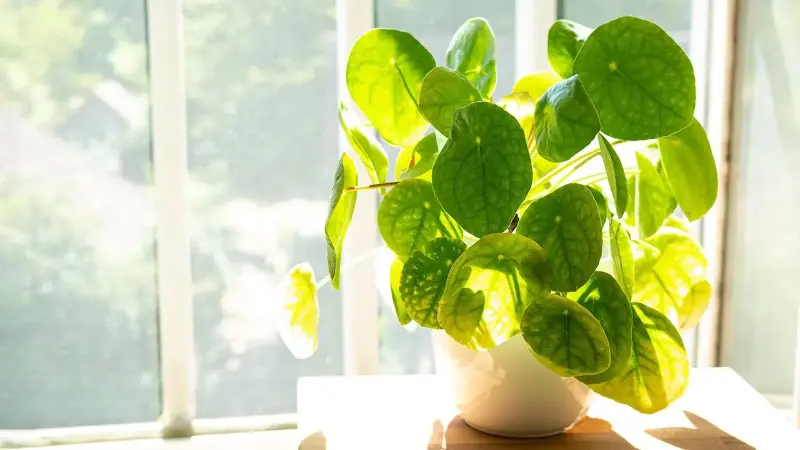
Houseplants have long served a purpose beyond greening up interiors. Across many cultural traditions they are symbolic of different life events and are even believed to support luck and good fortune. The Chinese money plant is considered one of the luckiest, both in Feng Shui and the wider Chinese culture, particularly when it comes to wealth.
There are actually quite a few houseplants referred to as money plants, but the Chinese money plant (Pilea peperomioides) is one of the luckiest houseplants to incorporate into the home. Alongside its flat, round leaves representing abundance and good fortune, its easy nature makes it just as lucky and a good option for beginner plant parents.
But, if you allow your Chinese money plant to deteriorate and you don't give it the right care, its luck will be depleted, a Feng Shui expert warns. With this in mind, they explain here why Chinese money plants are lucky and how to go about unlocking its good fortune in your home.
This Chinese money plant comes in a 4-inch pot, ready for placing in a decorative planter for displaying.
This Chinese money plant comes is compact at time of delivery, planted in a 4-inch nursery pot.
This Chinese money plant comes in a 4-inch pot to transfer into a decorative planter. It does best in a planter with a drainage hole.
Why Are Chinese Money Plants Lucky?
'The reason why Chinese money plants are lucky is because of their shape, growth pattern, and symbolism. They all correspond to prosperity energy,' says Feng Shui expert, Cathy Orr from The Uncluttered Life.
With flat, rounded foliage, the Chinese money plant earns its name from the fact it is reminiscent of rounded ancient Chinese coins. Quite literally, this is associated with bringing good fortune and financial wealth.
More widely in Chinese tradition, round shapes are associated with abundance and can bring some extra luck in realms of career, growth, and the future.
Its association with luck also comes from the fact it is easy to care for and it's even easier to propagate a Chinese money plant to multiply it.
It produces 'pups' or offshoots that can be snipped off the mother plant (using houseplant snips, like these from Amazon), planted in soil, and rooted to create a new plant.
How to Harness the Chinese Money Plant’s Luck
Now you know why Chinese money plants are lucky, there are a few things you can do to take advantage of this.
In terms of Feng Shui, turn to the Feng Shui energy map (or Bagua). Standing at your front door looking into the home, this map outlines the different energy areas that govern different aspects of life.
'The Southeast area represents Wealth, which is where a Chinese money plant can naturally strengthen energy,' explains Cathy. Likewise, a home office is a good spot for a Chinese money plant, or an entryway to create an abundant, positive welcome.
You can also place a Chinese money plant in the Health and Family area of the home (the center of the home or gathering areas like a living room), which helps govern strong relationships and emotional balance.
As well as getting placement wrong, it's a Feng shui houseplant mistake to ignore the needs of your Chinese money plant. After all, an unhealthy, drying plant is far from being lucky.
'Do not neglect this plant,' warns Cathy. 'A thriving plant equals thriving money. Yellowing, dusty, or dying leaves indicate financial stagnation,' she adds.
You can stop Chinese money plant leaves from curling by increasing humidity for this indoor plant.
They're actually succulents native to the damp environments of forests in the Yunnan and Sichuan provinces in Southwest China, appreciating humidity levels between 40-60%. One of the best ways to do provide these conditions is by putting a humidifier (like this from Amazon) in place.
Another way to make the most of Chinese money plant's luck is by sharing it. In Chinese tradition, it's a popular gift for new beginnings, from starting a new job to moving into a new home. This leans into the idea of wealth and prosperity being shared, not hoarded.
Propagating is one of the best ways to share a Chinese money plant, too, and shows just how giving this plant can be.
FAQs
Do Chinese Money Plants Like Direct Sun?
No, direct sun will cause leaf scorch on Chinese money plant's iconic leaves. In their native habitat of forests in Southwest China, these succulent plants grow beneath canopies. They have sensitive leaves as a result, appreciating bright light but out of full sun. An east-facing window is ideal for these plants for this reason.
If you find your Chinese money plant is struggling, there are a few things you can do to revive a Chinese money plant. This includes boosting humidity in dry rooms, watering when the soil has dried out completely, and improving drainage to stop issues like houseplant root rot.
Shop Houseplant Accessories
This set of indoor garden tools has everything you need to repot plants, aerate soil, and clean houseplant leaves. It comes with a canvas bag for storage.
This set of 2 blue ceramic planters are great for medium-sized houseplants. They have drainage holes and saucers to aid moisture management.
Place moisture-loving plants on top of one of these humidity trays to boost humidity levels. As the water evaporates around the pebbles, humidity levels increase around the plant.
Use this plant food to give houseplants a boost of essential nutrients. Dilute with water to apply during spring and summer.
This duo has everything you need to keep houseplant hydrated. Use the plant mister to spritz foliage and remove the watering can's spout for more targeted watering.
This soil moisture meter simply inserts into soil and tells you how wet it is, so you'll never over or underwater houseplants again.