



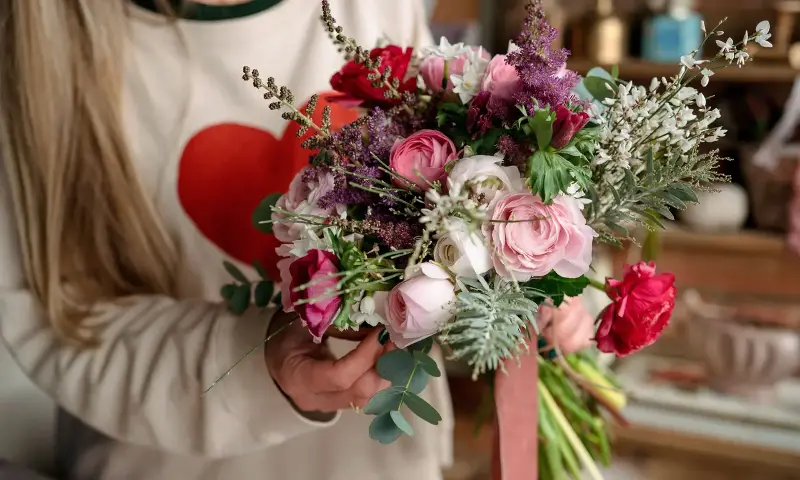
One of my pet peeves about Valentine's Day (and there are a few) is the ubiquity of red roses that flood store fronts and grocery stores. Roses are not naturally in season at this time of year, but there are many beautiful flowers that are, and I want to show you how to put them together to create a more seasonal hand-tied bouquet.
Roses are the traditional romantic gesture on Valentine's Day, and they will always carry elegance and charm. What's even more romantic, in my opinion, is thinking about what's growing in our backyards right now, such as daffodils and snowdrops, and gather a lovely posy of these to show our love for someone.
Whoever you want to send flowers to this Valentine’s – a best friend, partner, or even yourself – I want to show you a hand-tied bouquet that captures feelings of love and friendship using blooms that are in season now. In the latest episode of Petals & Roots, I give you a recipe for a more seasonal, but equally beautiful hand-tied bouquet, and I show you how to create it like a professional.
How to Create Your Own Valentine's Hand-tied Bouquet
The flowers I have chosen for this Valentine's bouquet are ranunculus, anemones, narcissi, astilbe, genista, eucalyptus, and acacia foliage.
My color palette is soft and warm. I wanted to avoid an overtly red bouquet, but I have leaned into shades of blush and fuchsia here, with calming whites and accents of mauve and mint.
I'm going to take you through my method for creating a traditional hand-tied bouquet with a spiral stem, which will give you a beautiful, relaxed floral arrangement with a professional finish.
Start with a focal stem and place it between your thumb and forefinger. This represents your binding point. Anything above your hand will be the bouquet, and below are your stems.
Take your next stem (I used a frothy astilbe) and cross it in front of the first one at a right angle, then bring it down. Repeat a couple more times. Once you have three to four stems in your hand, make a quarter turn.
Continue in this way, alternating the stems you add so that the bouquet has a lovely balance of focal flowers, frothy fillers and foliage.
Remember to keep turning the bouquet after every three to four stems, to maintain the spiral stem effect.
When you are happy with the shape of your bouquet, a great trick I use is to finish it by placing several curvy foliage stems around the edge to create a natural collar for your flowers.
This will make the bouquet look bigger, and also adds to its pro finish.
Take a length of natural jute twine, and tie this around your bouquet at the top of your hand. Tie it fairly tightly, but not too much that you inhibit any movement between the flowers; allow them to breathe a little bit.
Lastly, place your velvet ribbon around the stems and secure in a very simple, rustic knot. Your hand-crafted bouquet is ready to gift.
Petals & Roots is a weekly video series fronted by me, Rachel Bull, Head of Gardens at Homes & Gardens. Every weekend on social, I share my seasonal gardening and flower arranging expertise and advice.