



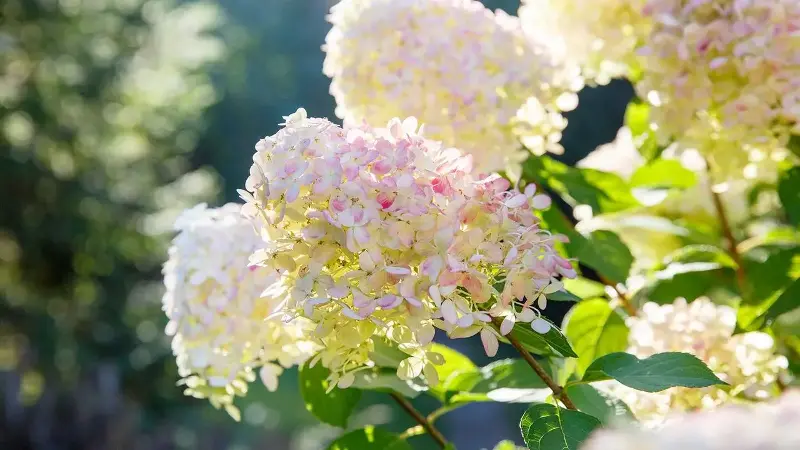
The fourth season of Netflix's Bridgerton has finally landed and there's just one thing the Gardens team here at Homes & Gardens are obsessing over: the white hydrangeas. It's no surprise they're a signature floral feature this season, as there's a lot of symbolism behind these regency garden staples. In fact, the color of hydrangeas has long had different connotations across historical and cultural traditions, giving a deeper meaning to the ones you grow in your yard.
There are so many hydrangea varieties to choose from, all with different shapes and growing habits, but it's the color that you should pay extra attention to. From white hydrangeas exuding purity and grace, to purple being symbolic of wealth and success, there's a lot more to the hue of your hydrangeas than aesthetic value.
So, it's not just the demands of hydrangea care you should be aware of when choosing the right bloom for your yard, understanding what the color represents can help you make the best choice for the feeling you want to create in your outdoor space. Here, we run through what the color of hydrangeas symbolize and some of the best varieties to choose.
What Does the Color of Your Hydrangeas Symbolize?
If you're feeling a little nervous to add a hydrangea to your yard, it might just be that you've fallen for hydrangea myths.
The truth is they're pretty straightforward to care for, especially once established, and will last for years to come.
White Hydrangeas – Purity, Grace, Abundance
It's not surprising to learn that white hydrangeas are linked to ideas of purity, much like other white flowers, and this doesn't stem from just one tradition.
In the Victorian language of flowers (or floriography, a historical language where plants represent different emotions and sentiments), white flowers symbolize grace, sincerity, and abundance.
In this context, they were often used to display deep emotional connection, without romantic intention, i.e. a beautiful flower to represent friendship and deep gratitude.
This is similar in historic Japanese tradition (where many hydrangeas are actually native to). White hydrangeas have long been understood as a sign of humility, thoughtfulness, and gratitude.
On the flip side, however, hydrangeas were also often used in Victorian times to send a message of vanity and boastfulness, thanks to their showy mass of flowers.
Luckily, in modern day aesthetics, white hydrangeas are appreciated once again for their impressive beauty and make ideal additions to minimalist gardens, offering a 'clean' look.
'Annabelle' hydrangea is perhaps the most adored white hydrangea. Not only does it have large, showy blooms, but it's also a reliable bloomer, highly disease-resistant, and it tolerates poor soil and shady conditions. It's best grown across US hardiness zones 3-9.
This hydrangea grows best across US hardiness zones 3-8, thrives in full sun, and can grow in containers or borders. It reaches a mature size between 4-5ft.
This is a panicle hydrangea, with cone-shaped blooms. It reaches 4-6ft in height and 3-5ft in spread, suitable for both pots and borders. 'White Wedding' also blooms on new wood, making it a reliable choice. It's best suited to US hardiness zones 4-9 and it can adapt to full sun-partial shade.
Pink Hydrangeas – Affection, Love, Sincerity
Pink hydrangeas are some of the most eye-catching to find in a cottage garden. In terms of what the color of hydrangeas symbolize, pink represents true affection, sincere feelings, and romance.
They're understood as flowers of heartfelt emotion and romantic inclination. Unlike other romantic spring flowers, like cut roses that quickly fade, pink hydrangeas are thought to symbolize steady affection rather than fleeting passion.
In Japanese tradition, these pink blooms likewise represent affection, as well as joy and warm appreciation. They're even considered to be a visual representation of a beating heart.
In modern day Western understanding, pink hydrangeas offer a gentle feel to gardens, continuing to present a feeling of romance and femininity.
This is a mophead hydrangea, with large round clusters of bright pink blooms. The flowers first appear in light pink and then darken into a deeper shade. It's best for US hardiness zones 5-9 and reaches an ultimate size of 3-4ft (height and spread).
A hydrangea tree is one of the most unique types of hydrangea. It's a deciduous tree with dense panicle blooms that start white and then blush pink in summer. It reaches a height of 5-8ft tall and is great for gardens in US hardiness zone 3-8, tolerating full sun to partial shade.
This hydrangea starts off with white-green panicle flowers that deepen and turn pink in late summer and fall. It does best in zones 3-9 and reaches an ultimate size of 4-6ft (height and spread). It's an easy and low-maintenance variety.
Blue Hydrangeas – Apology, Regret, Forgiveness
When it comes to what the color of hydrangeas symbolize, blue is one with a little less joyful meaning.
In Victorian floriography, gifting blue hydrangeas sends a message of coldness, especially to love interests who rejected a relationship, criticizing their heartlessness. It's a flower that represents emotional distance or unreturned love.
Similarly, in Japanese tradition, blue hydrangeas are associated with apology, regret, and sincere reflection. It's a flower to show remorse and taking accountability.
There's also a color psychology aspect to blue hydrangeas, offering a melancholy feel. At the same time, just like blue houseplants, it can be interpreted as having a calming presence in modern day understanding.
It's also better received nowadays, often found in difficult times to portray understanding and empathy.
This beautiful blue hydrangea is a lacecap variety, with delicate flatter flowerheads. It thrives in full sun but tolerates partial shade, and prefers an acidic soil to maintain its vibrant blue hue. Grow it in US hardiness zones 5-9, where it will reach an ultimate height and spread of 1-2ft.
'Endless Summer' is adored for its reliable reblooming throughout the summer months. It produces large dome-shaped flowers, blooming on both new and old wood for a long-lasting display. It's best grown across US hardiness zones 4-9 and prefers partial shade. At a mature height, it reaches 3-5ft tall.
This deciduous shrub is one of the best choices for blue blooms. Its dark green foliage makes the bright clusters of flowers pop. It thrives across US hardiness zones 6-9, requiring consistent watering and filtered sunlight. It reaches a height of 3-6ft tall.
Purple Hydrangeas – Wealth, Success, Royalty
As a traditional royal color, it's not surprising that purple hydrangeas have Western associations with authority and wealth. Specifically, they're thought to represent refinement and elevation.
In Japanese tradition, they're flowers that are linked to nobility and wisdom, as well as thoughtfulness.
The fact they're a mix of pink and blue hydrangeas also gives purple hydrangeas a more complex meaning.
It's a purple plant that represents both admiration and emotional maturity, understanding, and reconciled feelings.
This bigleaf hydrangea has a gorgeous mix of blue and purple flowers. It's compact, reaching a height and spread of 3-4ft, and grows best across US hardiness zones 5-9. It blooms from early summer to fall, making it a good choice for a long-lasting, colorful display.
'Bloomstruck' is another Endless Summer hydrangea that offers repeat blooms through the summer months. It's a particularly eye-catching variety with deep purple and blue hues. Grow it across US hardiness zones 4-9 and keep soil acidic-neutral to encourage purple hues.
'Violet Crown' has distinct violet-blue petals with lime green centers. It has a long blooming period, from late spring until frost, and reaches a mature size of 3-4ft (height and spread). This hydrangea is best grown across US hardiness zones 5-9.
Green Hydrangeas – Renewal, Growth, Contentment
Green hydrangeas are arguably one of the luckiest plants you can have in your yard, with green flowers long being associated with good fortune, prosperity, and growth across many cultures and traditions.
Popular varieties like 'Limelight' are thought to represent new beginnings as the flowers first emerge green and later blush pink in summer. It offers a sense of renewal before offering a long-lasting display.
In modern Western understanding, they're also seen as sophisticated and timeless, with a natural elegance.
'Little Lime' is a beautiful hydrangea that first emerges lime-green and then changes into pink as summer progresses. It's a taller shrub, reaching 3-5ft, ideal for borders. Well-draining soil is ideal for these shrubs, as well as partial sun. 'Little Lime' is best grown is US hardiness zones 3-8.
'Limelight' is popular for its color-changing blooms, first appearing green-white and then blushing deep pink towards fall. It's particularly adored for its huge conical flowerheads and sturdy stems. Grow it in US hardiness zones 3-9.
This compact hydrangea has dramatic color-changing panicle flowers, which transition from lime green to a rich red in fall. It reaches a height 3-5ft tall and grows best across US hardiness zone 3-8 in a full sun-partial shade position.
FAQs
How Do You Change the Color of Hydrangeas?
You can change the color of hydrangeas by amending the soil. Making the soil more acidic will turn hydrangeas blue, while alkaline will encourage a pink hue. It's worth noting this is only possible with some hydrangea varieties, most notably bigleaf and mountain hydrangeas.
When growing hydrangeas, it's important to familiarize yourself with a few things, including places you should never plant hydrangea and what to do with hydrangeas in fall to ensure you get another year of big, long-lasting blooms.
Shop Hydrangea Care Essentials
This fertilizer is specially formulated to support hydrangea growth, encouraging a brighter display.
These long sleeve gardening gloves will protect hands and arms from sharp stems when tending to shrubs.
Use these bypass pruning shears to tend to woody shrubs, like hydrangeas. It has a stainless steel blade for clean cuts.