



This year, West Bengal’s Poila Baisakh and Assam’s Bohag Bihu are being celebrated together, bringing a shared spotlight to the region’s rich culinary heritage. But beyond homes and community feasts, these flavours are also making their way into modern restaurants, where chefs are reimagining GI-tagged ingredients from the native land in inventive ways.
“Geographical Indication (GI)-tagged ingredients are not just products; they are living stories of place and people,” says MasterChef Shipra Khanna, who recently travelled through Assam. “Reimagined in modern kitchens, they preserve their roots while supporting local communities, making it exciting to see them celebrated in restaurants today.”
Assam: Rooted flavours, reimagined
Assam’s festive spread is built around GI-tagged ingredients like Joha rice, Bora chawal, and Kaji Nemu. Traditionally, the short-grain Joha rice is used in Joha Saulor Payas (sweet rice pudding) , while Bora chawal forms the base of Bihu favourites like pitha (rice cakes). Chokuwa rice is often paired with curd and jaggery for quick, nourishing breakfasts, while Kaji Nemu adds its distinctive tang to dishes like Masor Tenga (fish curry)
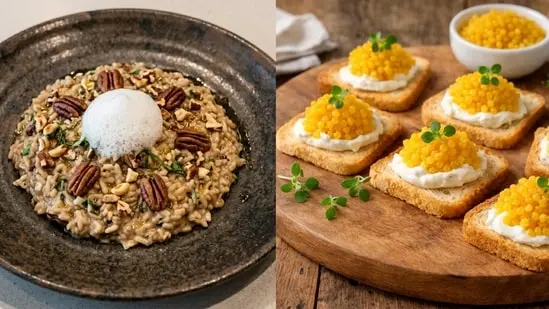
But walk into a modern kitchen today, and you’ll find Chef Nishant Choubey turning these traditions on their head with his Smoked Joha Rice & American Pecan Risotto with Kagji Nimbu Air and Fermented Bamboo Shoot Oil. “The indigenous Joha rice, prized for its delicate aroma, is gently smoked and cooked risotto style allowing its natural fragrance to unfold while absorbing the richness of toasted pecans. A light Kagji nimbu air introduces a bright, citrus lift cutting through the creaminess and adding a fleeting freshness to each bite. The dish is finished with a drizzle of fermented bamboo shoot (karil) oil, bringing in a distinct umami sharpness and a subtle nod to traditional preservation techniques of the region,” he says about the ambitious dish.
Another reimagination comes from Project Otenga’s chef Kabyashree Borgohain who works with Bora chawal saying, “This Bora Chawal Chicken Stew with Piyali Paleng is a simple yet deeply comforting dish. The bora chawal lends a silky, lightly glutinous texture to the stew, while the minced chicken adds richness and depth. Cooked with garlic, seasonal greens, and coriander roots, it comes together quickly but feels layered in flavour. A squeeze of kaji nemu brightens the dish, while toasted sesame seeds and chilli oil add the finishing touches. I like to keep it wholesome and versatile—you can pair it with something like a beetroot cutlet, nachos, or even a light salad.”
Bengal: Sweet traditions, new formats
Bengal’s GI-tagged landscape leans towards the sweet, with icons like Bardhaman Mihidana, Sitabhog, Joynagar Moa, and Nolen Gurer Sandesh. While these are typically enjoyed in their classic forms, chefs are now experimenting with presentation and texture. Chef Nishant’s reinterpretation of the Bardhaman Mihidana turns the tiny golden droplets. “These sweet pearls are paired with lightly sweetened cream cheese, creating a balance between richness and gentle sweetness,” says Nishant. Served on a crisp melba toast, the dish becomes a playful yet refined canapé that bridges nostalgia and innovation.
Influencer Pradiptaa (@burping_bengalis) turns the Nolen Gurer Sandesh into a rich ice cream by blending cream, milk powder, and melted nolen gur. Whipped to soft peaks she recommends folding in bits of sandesh, swirling some more gur, and freezing overnight for a creamy, caramel-like consistency with nostalgic depth.