



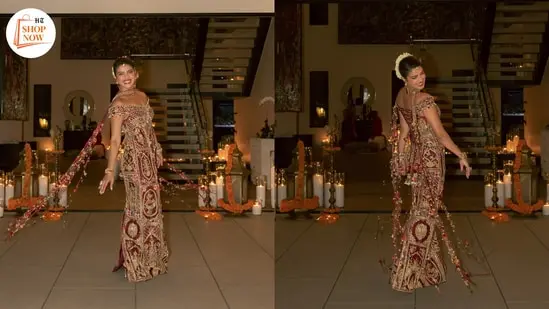
Priyanka Chopra's Diwali outfit was more than a festive red-carpet moment. The actor celebrated the festival in a custom maroon-and-gold silk gown by designer Karan Torani, and its craftsmanship is what makes the ensemble particularly interesting. According to the designer, the creation involved more than 2,200 hours of work.
The gown brought together several Indian embroidery techniques, traditional garment references and architectural influences. Rather than relying on a conventional festive silhouette, Torani reimagined familiar Indian design elements in a contemporary, sculpted gown.
Here's a closer look at the details behind Priyanka Chopra's Diwali outfit.
A 2,200-hour creation featuring Kashmiri aari and zardozi
The deep sindoori-coloured silk gown featured an elaborate combination of Kashmiri aari, zardozi, dori and marodi work. Mirror work, pearls and cowrie shells added further texture and detail to the ensemble.
Each technique contributed to the layered appearance of the outfit. The cowrie shells, in particular, had a personal connection: Torani said they were a nod to his Sindhi roots.
The amount of work involved also puts the focus on the time and craftsmanship behind elaborate occasionwear. With more than 2,200 hours dedicated to the gown, its embellishment was not simply decorative; it formed a central part of the design.
The Indian architecture behind Priyanka's gown
Torani drew inspiration from India's architectural heritage, particularly jharokhas, old forts and arches that frame traditional courtyards.
This influence can be seen in the way the gown combines a structured silhouette with intricate embroidered detailing. The designer described the surface as an embroidered garden featuring birds, flowers and elements inspired by the sky.
The result was a look that brought architectural references into contemporary festive dressing rather than reproducing a traditional outfit literally.
An angiya-inspired bodice and a reimagined odhni
Another interesting detail was the gown's construction. Its sculpted, off-shoulder bodice drew inspiration from the traditional angiya, while the flowing element at the back reinterpreted the odhni.
The latter finished in cascading tassels and ghungroos, adding movement to the otherwise structured silhouette. Torani also connected these details to the symbolism of Diwali, describing them as an invocation of Goddess Lakshmi's arrival.
This combination of traditional references and modern construction gave the gown its distinctive identity.
Priyanka Chopra celebrates Diwali with Nick Jonas and Malti
Priyanka also shared photographs from her Diwali celebrations with husband Nick Jonas and daughter Malti Marie. Nick complemented the festive mood in a kurta paired with an embroidered jacket.
The family photographs offered a closer glimpse of the occasion, while Priyanka's outfit pictures highlighted the gown's detailed embroidery and flowing back.
The takeaway: Indian craftsmanship beyond traditional silhouettes
What makes Priyanka's Diwali look interesting is how it brings together different craft traditions without limiting them to a conventional lehenga or saree. Kashmiri embroidery, Sindhi references, traditional garment construction and architectural inspiration all find space in a contemporary silk gown.
It is also a reminder that festive fashion can draw from India's craft heritage in unexpected ways. Sometimes, the most memorable part of an outfit isn't its silhouette or label, but the hours of skilled work and the stories stitched into it.
Similar stories for you:
Sai Pallavi's Sita wedding sari in Ramayana
Loved Malaika Arora's saree with a belt? Here's how to recreate the look
Koffee with Karan 9 fashion: Kiara's red dress, Rashmika's ₹5 lakh gown
Disclaimer: At Hindustan Times, we help you stay up-to-date with the latest trends and products. Hindustan Times has an affiliate partnership, so we may get a part of the revenue when you make a purchase. We shall not be liable for any claim under applicable laws, including but not limited to the Consumer Protection Act, 2019, with respect to the products. The products listed in this article are in no particular order of priority.