



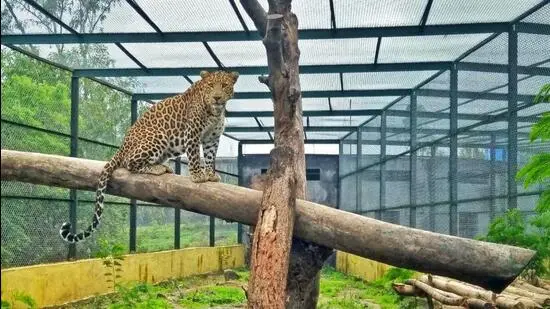
PUNE: With growing incidents of human-leopard conflict in parts of Maharashtra such as Junnar – which is characterised by frequent leopard movement across human-dominated landscapes – the Pune forest department has initiated efforts to examine whether or not Rajasthan’s Jawai model of coexistence between human beings and leopards can be replicated in Junnar.
In this regard, a delegation comprising forest officials, wildlife experts, researchers, and political leaders such as Dilip Walse-Patil and Radhakrishna Vikhe-Patil; and led by Pune district collector Jitendra Dudi; visited the Jawai leopard reserve on March 28 and 29 this year. The visit was organised in collaboration with the Wildlife Institute of India to study the mechanisms that have enabled Jawai to maintain a relatively low level of conflict despite having a high density of leopards. The department is currently evaluating whether or not elements of this model can be replicated in Junnar. “We are assessing the Rajasthan pattern to understand its effectiveness and explore its applicability in Junnar,” a senior forest official said.
About the visit, chief conservator of forests (Pune) Ashish Thakre, said, “The delegation visited the Jawai leopard reserve which is known for its unique model of human-leopard coexistence. We will soon be exploring if a similar pattern can be implemented in Junnar to mitigate the human-leopard conflict.”
While Junnar has increasingly become the focal point for conflict mitigation efforts in Pune district. The region has seen a steady rise in leopard presence near villages, agricultural fields and human settlements, prompting authorities to implement experimental measures such as a leopard birth control programmes and a proposed leopard safari project.
Whereas the Jawai region presents a unique example of coexistence, where leopards live in close proximity to human settlements without frequent incidents of attack. The landscape, characterised by granite hills and caves, provides natural shelter for leopards, allowing them to remain largely undetected during the day. A steady prey base, including livestock and small wild animals, reduces the likelihood of aggressive encounters. Additionally, the cultural beliefs of the local Rabari community play a significant role in shaping this coexistence. Leopards are often regarded with reverence, which has fostered a high level of tolerance even in cases of loss of livestock.
However, there are key differences between Jawai and Junnar that might limit the replication of the Jawai model in Junnar; as pointed out by wildlife experts. One of the major distinctions lies in the dietary pattern of leopards in Junnar. Unlike Jawai, where leopards rely largely on livestock and natural prey, leopards in Junnar predominantly feed on poultry. The consumption of poultry—often raised with the use of chemicals and supplements—may be influencing hormonal changes in these leopards such as increased aggression among them, thereby elevating the risk of human-leopard conflict in the region.
Experts also note that leopards in Junnar appear to be more aggressive as compared to their Jawai counterparts, making coexistence more challenging in the current scenario. These behavioural differences, coupled with variations in habitat and human population density, underline the complexity of implementing a model similar to Jawai in Maharashtra.
The forest department is expected to continue its assessment before deciding on the next course of action for Junnar, as it seeks to address the rising conflict while maintaining the ecological balance.