



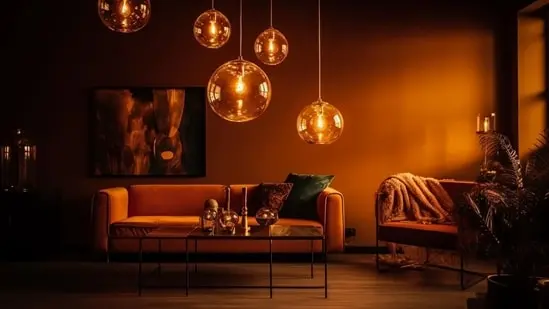
Summer evenings at home are meant for relaxing and unwinding after a long day spent enduring heat and humidity outdoors. So, the ambience of the space needs to reflect a sense of calm and comfort. The choice of lighting plays an essential role here, determining whether a room feels soothing or too harsh. But when you thoughtfully layer lighting can instantly make a home feel cooler, cosier and more comfortable during summer evenings.
ALSO READ: Interiors feeling stuffy and dim? Change the vibe by letting in the natural light with these 4 smart hacks
Ambient lighting creates an atmosphere that is more suited for relaxation and comfort, offering a soft and balanced glow that makes the space feel calm and cosy during summer evenings.
To understand the possible lighting choices for creating a comfortable summer ambience at home, Shaleen Nayak, business unit head – lighting, solar, wires and cables at Crompton Greaves Consumer Electricals Ltd, shared with HT Lifestyle some smart ways to layer lighting effectively for a calmer and more functional living space.
“Most Indian homes still approach lighting the way we approach fans: one light per room, switched on, job done,” she addressed the problem at home. Layering, however, brings texture and depth to a space instead of making it feel flat and overly functional.
Shaleen further revealed that opting for a combination of ambient, task and accent lighting can make a space more comfortable, functional and visually balanced.
“With the right light levels, suitable tones, and energy-efficient options, your home can remain easy and comfortable to live in during summer evenings,” she further added.
Here's her guide on how to layer lights and ace summer evening lighting:
1. Start with a balanced ambient base
- Ambient lighting forms the base of any room, ensuring even light distribution without shadows or dark spots.
- LED ceiling lights or energy-efficient tube lights help create a consistent spread of light.
- Compared to conventional options, LED Ceiling Lights offer better brightness, use less power, and last longer, making them suitable for regular use.
2. Choose the right colour temperature for the mood
- The tone of light affects how a space feels. Warm White lighting, typically in the range of 2700K–3000K, creates a relaxed setting and works well in bedrooms and living areas.
- Cool white or natural white lighting, usually around 4000K and 6500K, provides better clarity and is more suitable for kitchens and workspaces.
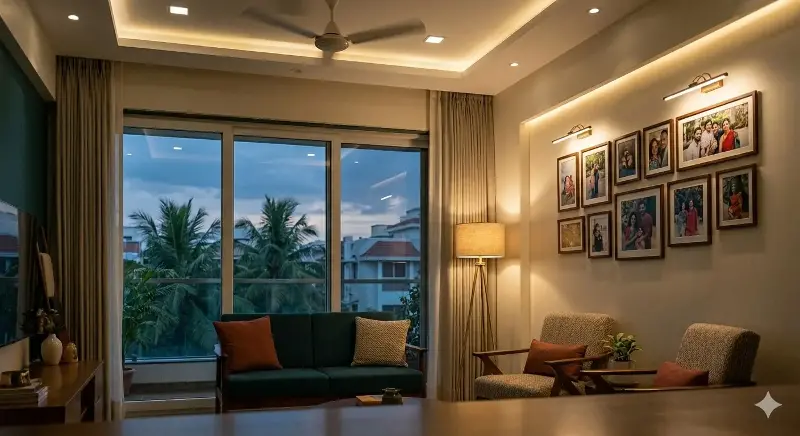
3. Incorporate task lighting for focused needs
- Task lighting provides focused illumination for activities such as reading, cooking, or working.
- Table lamps, study lights, or under-cabinet lighting can be used to light up specific areas without affecting the rest of the room. This ensures that essential spaces remain well-lit while the overall setting stays comfortable.
4. Use accent lighting to add depth
- Accent lighting helps highlight décor elements, textured surfaces, or design details within a room.
- Strip lighting, wall-mounted fixtures, or small lights like night lamps can be used to create subtle layers. These additions bring variation to the space and work well during evening hours when softer lighting is preferred.
5. Prioritise energy-efficient solutions
- Lighting use tends to increase during summer, making energy efficiency an important factor.
- LED lighting consumes less power, lasts longer, and delivers consistent performance. It also requires minimal maintenance, making it a practical choice for everyday use.