



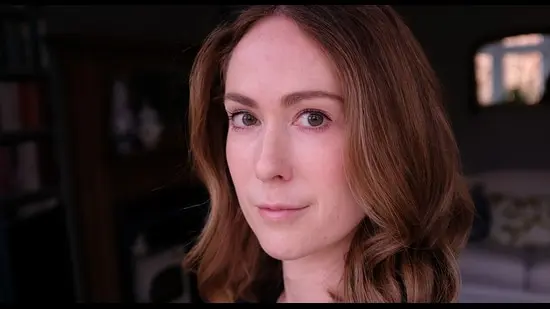
How did you get the right language and motivations of the time in The Pretender, and what were sources you relied on?
I read a lot of excellent modern historians such as Thomas Penn, but also used as many primary sources as I could: the chronicles written by the historians of the era, the letters of kings and ambassadors, the records of parliament, church and law courts. These were very patchy, however, and incredibly partisan. It was actually the accounts of the royal household, which unexpectedly gave me the strongest sense of the real people behind the history. (I’d recommend Tracy Borman for more on this.)
As a first-time historical novelist, I underestimated the research I’d need to do. I realised it wasn’t enough to know what the houses looked like, what my characters were eating or what was going on politically in that exact moment. I needed to know the history of the history — the references that these characters would naturally call on. I also needed to know the cultural context: to show how what they read and watched informed their personalities, the way that television, media and the internet shape us. As you can imagine, the research ended up taking a lot longer than I envisaged: almost four years.
Having read your book and learning about other pretenders in historian Nathen Amin’s Henry VII and the Tudor Pretenders: Simnel, Warbeck and Warwick, I’m curious about what made you centralise Lambert Simnel’s story and not the others’?
Warbeck is the most well-known of the pretenders to Henry VII’s throne: the others ranged from the tenuous Raufe Wilford (fascinatingly described by Amin) to exiled Yorkists with a genuine claim, such as Richard de la Pole. All of their stories are interesting, but Lambert’s caught my attention partly because of what’s missing. We don’t know anything about his origins beyond the contradictory accounts of Henry’s historians, and the confession that was written for him. And we don’t know what happened to him in adulthood. He’s sent to work in Henry’s kitchens after his invasion fails, and then he’s swept off the page of history. This was a real gift to me as a writer. The idea that as he becomes an adult he’s now free of his early puppet masters, and finally has a measure of agency. In theory he could do what he wants — but by now, what does he want?
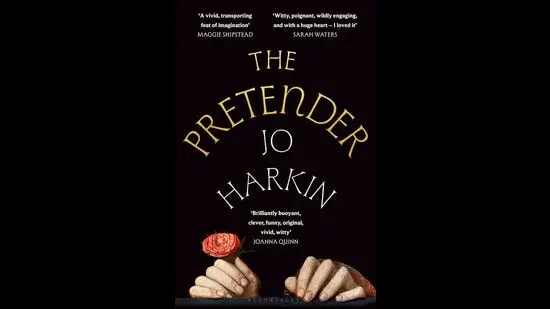
In several chapters, groups of townsfolk take the mic. They perhaps never had any opportunity to share their beliefs, gossip, and humour. Was that why it was crucial for you to execute a posthumous correction in the novel?
The common people of the era were a hugely important part of the novel: Lambert himself is a commoner and he grows up on a farm, then moves to the town of Oxford. The ‘low people’ — as they were called — that he’s surrounded with in his early years are characters who stay with him emotionally, if not physically.
In the historical record, we actually often do get a lively sense of the people from this milieu: not just through the records of local court proceedings, but in the official chronicles. By this time, serfdom was over and the populace enjoyed the freedom to spread rumours, rebel — and even riot. In some cases, their voices survive verbatim. For example, the unnamed Londoner who, when Edward IV was crowned, was heard to mutter ‘Twat and turd for him.’
What inspired you to construct Joan, a masterful political strategist about whom her father, Kildare, lamented: ‘Tis pity you’re not a man’. History has pushed women to the margins and they appear in footnotes as someone’s wife, or lover. Was fleshing out this character your way of pushing back against patriarchy?
At this point in history, I was surprised to find more women than I’d expected in positions of power, from the ruthless Queen Isabella of Spain to the strategic Margaret of York, ruling the Burgundian Netherlands in the absence of the men. The women commoners also had more autonomy than I’d assumed: they could run a business, choose a husband — and leave a husband.
Joan Fitzgerald was a real person, but we don’t know much about her — though, it seems, the Earl of Kildare’s daughters were generally as formidable as their father: her sisters were well-respected and played a role in Irish politics.
In The Pretender, however, Joan takes will-to-power to a darker place. It was important to me to show female power without anachronistically inserting a feminist of the modern variety, and my Joan is one manifestation of this. She’s as unscrupulous, scheming and sociopathic as the men. She was also exceptionally fun to write.
Before he was Lambert Simnel, he was John Collan. Then, he was the Earl of Warwick. All the changes suggest that education and grooming makes each one of us a “pretender”; we mould ourselves to keep up appearances. Were you interested in invoking this performative aspect of life?
It’s an interesting question to explore: are we our identical with our projected identity? Is there such a thing as a pure authentic self-existing apart from our various performances and personas? Or is self-something more multiple, changeable and nebulous? Is there any such thing as a self at all? The unanswerable nature of it is something that we’re all forced to make our own accommodations with. (Hari Kunzru’s The Impressionist is a brilliant exploration of this.)
People living today in democratic and socially mobile societies are of course more able to debate this concept than Simnel would ever have been. He was a long way from Sartre and good faith. In medieval England, your place in the world — king, cleric, peasant — was chosen for you by God, and it was identical with your true self. Transgressing your category was a serious matter, and not knowing your category — which is Simnel’s predicament — would not only have been profoundly disturbing, but personally dangerous.
The Pretender is heavily invested in literature, too. Did you happen to learn in some archive if John was interested in literature, or was it the partly-imagined territory?
All we know about the real Lambert Simnel is that he was convincing as a York heir, which implies he must have been given the usual classical education, with the usual reading list. His other reading interests are speculative, but I based these off the best sellers of the day, such as the racy Le Morte d’Arthur, which he’s obsessed with, and the bawdy Canterbury Tales.
I also invented his yearning to write ‘something true’, partly as a way to make sense of himself, as this unknown figure of ambiguous parentage. By the end of the book he’s become more disillusioned about access to writing though, and the privilege that dictates who gets to tell a story.
From the homosociality between characters to same-sex relationships, how crucial was it to label these as “deviants” at the time in this narrative?
I wanted the social landscape of The Pretender to be as realistic as possible. Simnel meets a large number of people, and statistically some of them would have been gay. Obviously, these people won’t be living a free and open life. At this point, the ‘closeted spouse’ has become a trope in historical fiction, but that would have been the reality for gay people in the medieval era, so it was impossible to avoid. I could however avoid the cliché of killing my gay characters or putting them through trauma to further my main plot line. I hope I’ve given them as much agency as they could realistically have had.
From the book: “Epic, ode, fable, lai, romance, fabliau: the shapes were wrong.” What other shapes did your telling of John’s story take, and, if there were more than one, what made you reject the others and continue with this one?
Initially, I had planned to experiment more with the forms of the day — using ballads and popular poems as vehicles of telling Simnel’s story. I even went so far at one point as to consider writing in Middle English! The problem is that these forms, long fallen into disuse, would have distanced the modern reader from the characters. And I wanted the reading experience to feel immersive and alive. So, I settled for reviving some obsolete but brilliant Middle English words, such as ‘wonderly’, ‘hudder-mudder’ and ‘cupshotten’, and kept the prose modern.
How did Ovid or Chaucer inform you in rendering this tale?
Ovid would have been a key part of Simnel’s education as Edward, but Chaucer was a more immediate and relevant influence, both for Simnel and — more importantly — for me. I had read a little Chaucer at school but had forgotten how rude it was. When I first conceived of the novel, I knew I wanted to find some humour and absurdity alongside the tragedy and violence. In fact, I had a vision of myself being hailed for the originality of my bold and irreverent voice. But I was quickly humbled because the Middle Ages was full of bold and irreverent voices: Chaucer foremost among them, masterfully blending the bleak and tragic with satire and farce. The best I could do was follow his lead, and hope that I did it justice.
Saurabh Sharma is a Delhi-based writer and freelance journalist. They can be found on Instagram/X: @writerly_life.