



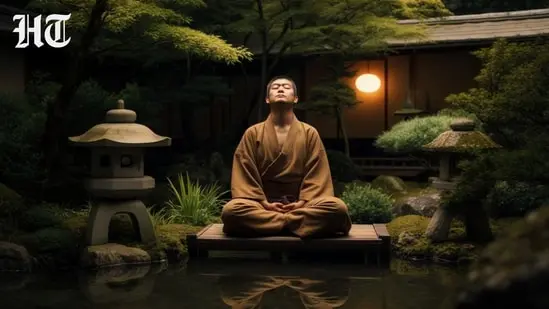
Life can sometimes become so focused on responsibilities, expectations and the next thing on your list that you forget to enjoy where you are. Japanese culture has several ideas that encourage you to slow down, accept what you cannot control and find meaning in everyday experiences. These philosophies can offer a different way of looking at life, especially when you feel stuck, overwhelmed, or disconnected from what once made you happy.
Here are five ideas that may help you reconnect with yourself and see life with more curiosity.
ALSO READ: 4 types of human personalities and how each one responds to stress, pressure, and challenging situations
1. Shikata ga nai
Accept what you cannot change
Shikata ga nai is often translated as 'it cannot be helped.' The idea encourages you to recognize when something is beyond your control and stop spending your energy fighting it. This does not mean that you should give up or stop trying. Instead, it is about knowing where your energy is better spent. When you accept what you cannot change, you create more room to focus on what you can actually influence.
2. Oubaitori
Remember that everyone grows differently
Oubaitori is often associated with the idea that every flower blooms differently. Cherry blossoms do not compete with maple trees. Each has its own beauty and its own season. You can apply the same idea to your own life. You do not have to measure your progress against someone else's career, relationship, achievements or timeline. Your journey is different. Instead of competing with everyone around you, focus on becoming a better version of yourself than you were yesterday.
3. Waku Waku
Make room for excitement
Waku waku describes a feeling of excitement or anticipation. Think about the part of you that could once become genuinely excited about small things, whether it was discovering something new, hearing a favorite song or making an unexpected plan. That sense of wonder may still be there. Permit yourself to look for things that spark your curiosity, even if they seem small or insignificant to someone else.
ALSO READ: Psychology explains why even highly intelligent people might sometimes feel stuck in life and struggle to move forward
4. Yugen
Appreciate the beauty of mystery
Yugen points to a sense of beauty and depth in things that cannot always be fully explained. Not everything in life needs a clear answer or a logical explanation. Sometimes, you can simply experience a moment without immediately trying to understand it. Allowing some mystery into your life can help you become more comfortable with uncertainty and appreciate experiences for what they are.
5. Bushido
Live according to your values
Bushido, traditionally associated with the samurai code of conduct, emphasizes values such as honor, discipline and integrity. Applied to everyday life, the idea can encourage you to think about the principles you want to stand by. Your choices shape the person you become. So, ask yourself what values matter most to you and try to live by them. Do something today that your younger self would admire.
Sometimes, falling in love with life again begins with accepting what you cannot change, appreciating your own pace and making space for curiosity, mystery and values that truly matter to you.
ALSO READ: 9 unusual Japanese habits that may seem strange but actually make everyday life better
Disclaimer: These Japanese concepts are presented as ideas for personal reflection and should not be treated as guaranteed solutions to life's challenges. Individual experiences vary, and meaningful changes may also require practical support and professional guidance when appropriate.