



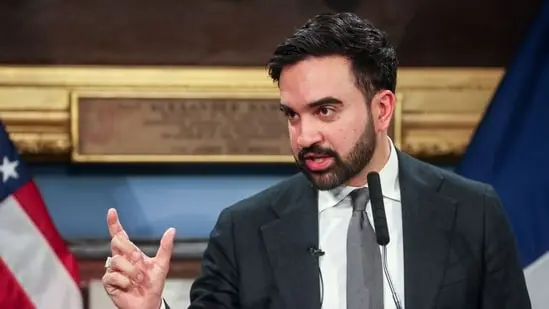
New York City taxpayers are being asked to pay $5.2 million in salaries for Mayor Zohran Mamdani's new Office of Mass Engagement, a figure that is 175% higher than originally reported.
How much is New York spending on Mamdani's office of mass engagement?
The Office of Mass Engagement has only been open for about a month but it has already more than tripled in size. Its headcount has jumped 186%, from 14 employees to 40, with $5,123,756 now set aside for salaries alone, according to the city's recently released 2027 executive budget, as per New York Post.
An additional $30,000 has been earmarked for non-staff expenses.
To put the numbers in perspective, the salary budget for this office is larger than the entire budgets of several city agencies, including the Board of Corrections, the Community Affairs Unit and the Office for People with Disabilities.
The New York Post had reported in March that the office had begun hiring for 14 positions costing about $1.6 million in taxpayer money. One of those positions was a campaign director role with a salary of $150,000. Mamdani is now planning to bring on an additional 26 employees by next year, at an average salary of $125,000, based on the budget details.
Critics were quick to speak out. Democratic political consultant Hank Sheinkopf told the New York Post: “This is purely politics at a time when real services are needed. We have real deficits and this mayor is spending five million dollars to put 40 political operatives on the payroll. It's morally incomprehensible . . . It's outrageous.” He added, “This isn't for anybody's benefit but the mayor's.”
According to the New York Post, the office's current hires include Commissioner Tascha Van Auken, Mamdani's former campaign field director and Mohamed Alharbi, the deputy borough director for Queens.
The report also said Mamdani has set aside $51.8 million for the mayor's office in 2027, which is $7 million more than former Mayor Eric Adams' budget last year.
Also Read: Bezos vs Mamdani: Amazon founder rips NYC's bloated school budget and 'tax the rich' agenda in fiery clash
What is the office actually doing?
Mamdani has said the Office of Mass Engagement was created to help more New Yorkers take part in city government, especially people from underserved communities. However, critics have questioned the office and its activities.
According to the New York Post, the office's first program, Organize NYC, involves recruiting volunteers and going door-to-door in parts of the Bronx, Queens, Manhattan and Brooklyn. Critics have also raised concerns because the outreach effort comes ahead of a vote on a possible rent freeze, a major Mamdani campaign promise.
Critics also flagged a $150,000 deputy director of co-governance role, whose job posting language was nearly identical to a DSA manifesto calling for municipal socialism in New York City.
A City Hall spokesperson told the Post the office had reached out to landlord groups as well and would not push for any specific policy outcome. “Every New Yorker should have a say in the future of their city,” said spokesperson Penelope Birnbaum.
Also Read: Trump vs Oman: Why US is threatening Muscat amid Iran, Strait of Hormuz talks
How the office was created
The Office of Mass Engagement was established on Mamdani's first day in office, when he signed an executive order creating it.
Mamdani announced the new office during a news conference at Grand Army Plaza in Brooklyn in January 2026, describing it as "a fundamental part of city government dedicated to rebuilding our social infrastructure at scale."
"The Office of Mass Engagement will organize participation across this city, proactively reach those that have been excluded, and ensure that public feedback is embedded directly into how we design policies, deliver services and make decisions," Mamdani said at the time, as per CBS News.