


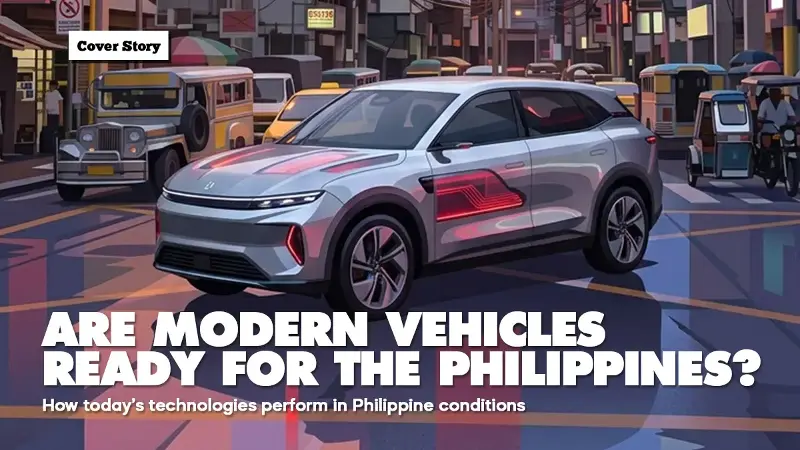
How today’s technologies perform in Philippine conditions
A sudden afternoon downpour transforms busy streets into a maze of puddles, slow-moving traffic, and fading lane markings hidden beneath murky floodwater. As visibility deteriorates, a warning appears on the dashboard. The vehicle’s driver assistance systems are struggling to interpret the road ahead.
For many Filipino motorists, it’s a familiar scene. And it raises an important question: as electric vehicles (EVs), hybrids, connected cars, and increasingly sophisticated motorcycles become more common on Philippine roads, are today’s technologies truly ready for the realities of local driving?
Spec sheets can highlight larger batteries, smarter software, and longer feature lists. But the real test begins once these vehicles leave the showroom and face the flooded streets, faded road markings, tropical heat, and congested traffic that define everyday driving in the Philippines.
So while the future of mobility may already be here, one question remains: Are modern vehicles truly ready for the Philippines?
The Rise of the Connected Vehicle
Today’s vehicles are software-driven machines that combine mechanical engineering with sensors, cameras, high-speed processors, and constant connectivity.
A decade ago, buyers primarily compared horsepower, fuel economy, and transmission types. Today, software has become just as important. Touchscreen responsiveness, smartphone integration, connected services, remote vehicle monitoring, and over-the-air (OTA) updates now rank alongside traditional performance figures when buyers compare new vehicles.
Advanced Driver Assistance Systems (ADAS) are among the most significant developments in modern mobility. Features such as adaptive cruise control, automatic emergency braking, lane-keeping assist, blind spot monitoring, rear cross-traffic alert, and traffic jam assist are designed to make driving safer while reducing driver workload.
Motorcycles are evolving as well. TFT digital displays, smartphone connectivity, turn-by-turn navigation, selectable ride modes, traction control, and anti-lock braking systems (ABS) are increasingly available even on commuter-oriented models.
These technologies promise safer, more convenient, and more connected journeys. But technology developed for global markets doesn’t always perform the same way once it encounters Philippine roads, weather, and traffic conditions.
The question isn’t whether these systems work. It’s how well they perform under the conditions Filipino motorists face every day.
Designed for Global Roads, Tested in the Philippines
Most vehicles are developed for global markets, where road conditions are generally more predictable and infrastructure is better maintained. Philippine roads present a very different set of challenges.
Potholes, uneven pavement, ongoing roadworks, and unpaved provincial roads place greater demands on suspension systems, tires, and underbody components. Models designed with low ground clearance for improved aerodynamics and efficiency may encounter practical limitations, helping explain why SUVs and crossovers continue to dominate the local market despite the growing number of electric sedans and hatchbacks.
Road conditions also influence how well driver assistance technologies perform.
Adaptive cruise control delivers its greatest benefits on expressways such as NLEX, SLEX, SCTEX, and TPLEX, where traffic flows consistently and lane markings remain clearly visible. In Metro Manila’s stop-and-go traffic, however, drivers may rarely have the opportunity to use the system to its full potential.
Lane-keeping assist provides another example. Because it relies on cameras detecting visible lane markings, faded paint, road construction, or floodwater covering lane lines can reduce its effectiveness or cause it to disengage temporarily. The system isn’t malfunctioning. It’s responding to conditions that make accurate lane detection difficult.
Some technologies prove especially valuable in Philippine driving conditions. Blind spot monitoring helps drivers detect motorcycles filtering through traffic, while rear cross-traffic alert and 360-degree cameras improve visibility when reversing out of crowded parking areas or navigating narrow streets. In many everyday situations, these features deliver more practical value than headline-grabbing performance figures.
Motorcyclists have also benefited from advances in safety technology. ABS, once reserved for premium models, is now available on many commuter motorcycles, while traction control on higher-end models improves stability on wet or slippery roads.
These technologies can significantly improve safety and convenience. Their effectiveness, however, depends not only on the sophistication of the system itself but also on the environment in which it operates. In the Philippines, road conditions remain as important as the technology designed to navigate them.
Heat, Floods, and Tropical Reality
If there’s one environment that truly tests today’s vehicles in the Philippines, it’s the country’s tropical climate.
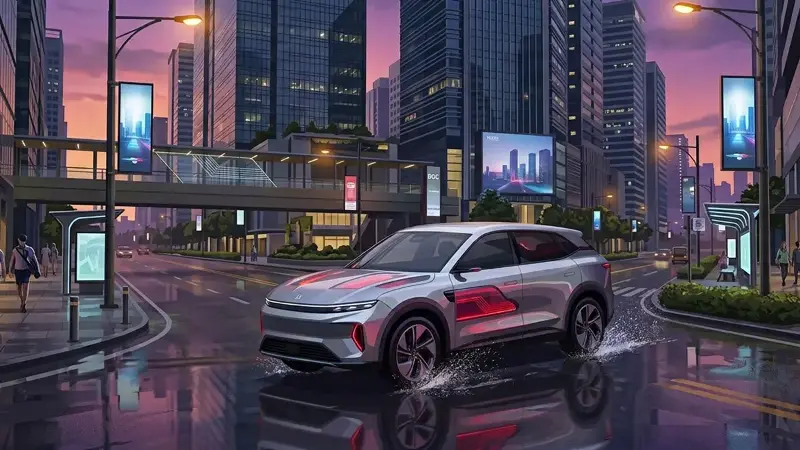
Every year, monsoon rains and typhoons leave roads submerged for hours or even days, turning routine commutes into unpredictable journeys.
For conventional gasoline vehicles, deep floodwater raises the risk of engine damage if water enters the intake system. Because EVs don’t use an internal combustion engine, they aren’t susceptible to hydrolock. That doesn’t make them immune to flood-related problems. Although their high-voltage battery packs are sealed and designed to withstand wet conditions, manufacturers generally recommend that flood-exposed vehicles undergo inspection to ensure electrical systems and sensors have not been compromised.
Floodwater poses a challenge for every type of modern vehicle. Whether powered by gasoline, hybrid systems, or electricity, today’s cars depend heavily on cameras, radar modules, electronic control units, and sensors that can be costly to repair if damaged.
Heat presents a different challenge.
The Philippines’ combination of high temperatures, humidity, and widespread outdoor parking places greater stress on batteries, electronics, and interior materials. Modern EVs use sophisticated battery management and thermal control systems to regulate battery temperatures during driving and charging, helping preserve both performance and long-term durability.
Even so, prolonged exposure to extreme heat can gradually accelerate wear. Battery technology continues to improve rapidly, but long-term performance under Philippine conditions remains one of the biggest unanswered questions surrounding electrification.
The EV Infrastructure Question
No discussion of current automotive technologies is complete without addressing one of the biggest questions surrounding electric mobility: charging infrastructure.
The situation has improved considerably in recent years. Charging stations are becoming more common in Metro Manila and other major urban centers, with shopping malls, office developments, dealerships, hotels, and even some fuel stations now offering public charging facilities. For many owners who primarily drive within the city, EV ownership has become increasingly practical.
Outside these urban hubs, however, the picture changes. Long-distance travel still requires more planning than it does with a conventional gasoline or hybrid vehicle, as charging stations remain unevenly distributed across the country.
Home charging remains one of the biggest advantages of EV ownership. But for condominium residents and households without dedicated parking, convenient charging remains a significant barrier.
Infrastructure also extends beyond charging stations. A reliable EV ecosystem depends on trained technicians, readily available replacement parts, and dealerships equipped to service high-voltage battery systems. While manufacturers continue to invest in these areas, support still varies from one brand to another.
For many buyers, this is where hybrids retain a clear advantage. They offer improved fuel efficiency and lower emissions without requiring drivers to depend entirely on public charging infrastructure, making them a practical stepping stone toward full electrification.
The ecosystem is steadily improving, but the pace of EV adoption will ultimately depend on how quickly the supporting infrastructure keeps up.
The Hidden Cost of High-Tech Ownership
Today’s cars are safer, smarter, and more connected than ever before. But that sophistication also changes what it means to own and maintain one.
Ownership is evolving alongside the technology. Vehicles may receive software updates after purchase that refine driver assistance systems, improve performance, fix bugs, and sometimes introduce entirely new features. Buying one today means buying into the software ecosystem that supports it.
At the same time, repairs have become more complex. Many advanced safety systems rely on cameras, radar sensors, ultrasonic sensors, and electronic control units working together in real time. Even relatively minor damage to a bumper, windshield, or side mirror may require specialized diagnostics and ADAS recalibration before these systems can operate as intended.
This growing complexity also places greater demands on dealerships and service centers, which must invest in high-voltage battery servicing, diagnostic equipment, and technicians trained to support software-defined vehicles. The level of expertise and after-sales support can still vary from one brand to another.
Parts availability is another important consideration. While some manufacturers maintain strong local inventories, others may require longer waiting times for specialized electronic components. Insurance is also beginning to reflect this new reality, as repairing and recalibrating advanced electronic systems can increase repair costs even after relatively minor collisions.
For today’s buyers, choosing a new car—which increasingly could be an EV or hybrid—involves more than comparing specifications and features. The strength of a brand’s service network, technical expertise, software support, and parts availability has become just as important as what’s listed on the spec sheet.
The Road Ahead
Today’s vehicles are cleaner, safer, more connected, and more software-driven. But technology alone doesn’t determine whether they’re ready for Philippine roads.
Flood-prone streets, tropical heat, uneven road surfaces, inconsistent infrastructure, and the realities of long-term ownership continue to challenge even the most advanced models, even as charging networks, dealer capabilities, and local adaptation steadily improve.
The next generation of vehicles will undoubtedly become smarter, more capable, and better connected. But their success will depend not only on advances in batteries, software, or driver assistance systems. It will also depend on how well those technologies adapt to the environments where Filipinos actually drive every day.
The next time a sudden downpour turns city streets into rivers, the real measure of automotive technology won’t be the size of its touchscreen or the length of its feature list. It will be how reliably those technologies continue to perform when conditions are far from ideal.
Because in the Philippines, the true measure of automotive innovation isn’t how a vehicle performs under ideal conditions. It’s how reliably it continues moving when the road ahead is anything but.
5 Questions to Ask Before Buying a High-Tech Vehicle
- Does it support OTA software updates?
- How extensive is the dealer service network?
- Can local service centers calibrate ADAS?
- What is the battery warranty?
- How readily available are replacement electronic components?
Words by Phia Manuell Layoso
Also published in GADGETS MAGAZINE Volume 26 Issue No. 11