



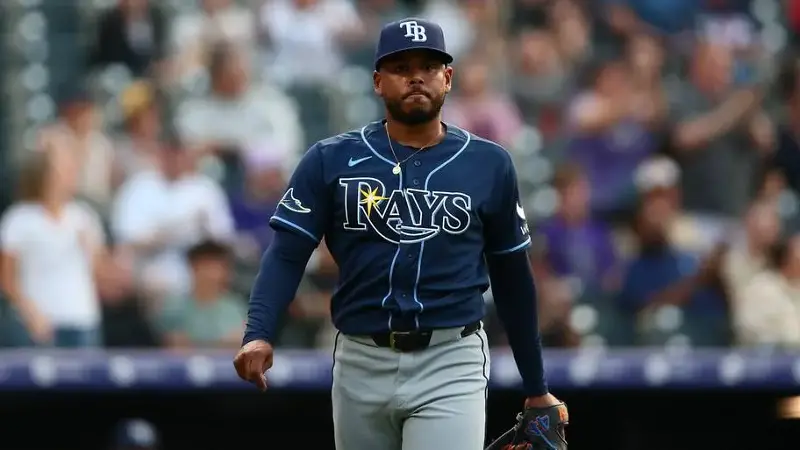
It's funny how quickly the narrative can change. Most reviews of a busy 2026 trade deadline had the Tampa Bay Rays as winners, addressing their two most pressing needs by adding righty Freddy Peralta and catcher Liam Hicks. Peralta in particular stuck out: Less than 12 months ago he was competing for NL Cy Young votes; surely, with Tampa's pitching gurus by his side rather than the vortex of suckitude that is the New York Mets, he'd reemerge as his old self for the stretch run.
Unfortunately for the Rays, that idea lasted all of [checks notes] 24 hours or so. Peralta got spotted an early 5-1 lead against the Colorado Rockies but immediately gave it all back and then some, getting torched for seven runs on nine hits and a walk in just 3.2 innings of work.
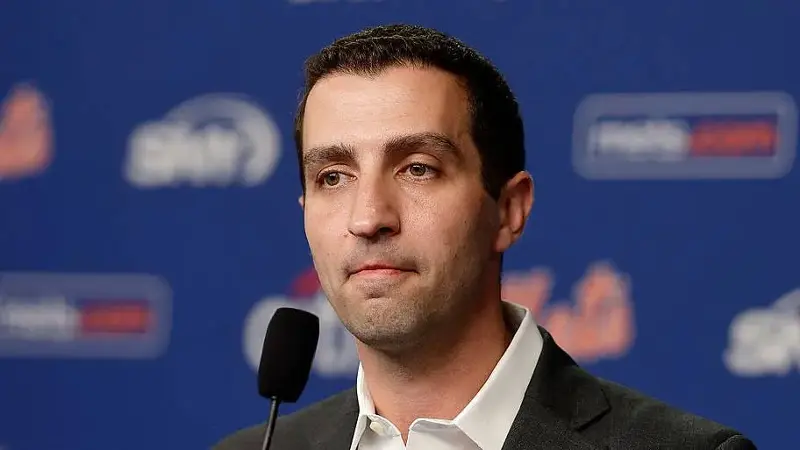
It turns out that Peralta may have been broken for reasons that had nothing to do with David Stearns or the pressure of New York or anything else you might have heard listening to drive-time callers on WFAN. His Rays debut went pretty much exactly the way his last month or two in Queens did, and now Tampa is left searching for answers with the playoffs looming — and left to face the possibility that they may take a massive L here.
Freddy Peralta's rough Rays debut shows his collapse wasn't on the Mets
Things went so sideways for the Mets in 2026, and Peralta individually, that there's been a bit of revisionist history going on. For starters: No, there was no indication that the righty would be anything other than the same quality No. 2/3 starter he was in Milwaukee, and public opinion at the time of the deal was pretty soundly in favor of the move for New York. It's also not true that he was a disaster all year long; after holding the Mariners to one run over six innings on June 3, he dropped his ERA to 3.63 and his FIP to 4.00, both perfectly fine numbers.
It was only a couple of months ago that the wheels came off, and once they did, no one could figure out how to put them back on again. And it doesn't seem like the Rays do either: Sure, Coors Field is no picnic, but at first blush Tampa didn't make any tweaks to Peralta's pitch mix or pitch shapes. He looked like the same pitcher he'd been for weeks, someone throwing without conviction or much of any idea where the ball was going on any particular pitch.
Clearly Tampa wasn't comfortable paying full freight for Tarik Skubal or another top starter in what proved to be a very hot market. There was more risk in that decision than most realized at the time, though, especially considering how badly the Rays needed rotation reinforcements with Shane McClanahan on the IL and both Griffin Jax and Drew Rasmussen needing to have their workloads monitored. And it's not like they bought incredibly low on Peralta, either. In fact, what Stearns and the Mets got in return was pretty intriguing, much more than you would've expected for a rental pitcher with an ERA pushing 5.
David Stearns did very well in return for Freddy Peralta
None of the three prospects the Mets got in the Peralta deal — infielder Emilien Pitre, righty Gary Gill HIll and outfielder Aidan Smith — are "headliners" in the traditional sense; none are particularly close to global top-100 status. Then again, that was always an unrealistic expectation for a Peralta return, regardless of what New York gave up for him. And there are some very, very interesting tools in this young trio, with reason to believe that at least two of them could be fast risers.
Pitre is the most exciting of the three, at least for my money. He grew up in Montreal before playing college ball at Kentucky, so it stands to reason that his development curve is a bit more delayed than other prospects of his age. He's done nothing but hit in pro ball, though, and at this point it's probably not too crazy to consider him a better middle-infield prospect than Jett Williams — the top-100 guy they gave up for Peralta in the first place.
Hill takes a bit more squinting (his K rate has plummeted and his ERA and homer rates at Double-A have not been great), but you can see why the Mets wanted to take a chance on him. He's got awfully long limbs and a full repertoire with several different fastballs and a change up — you don't often find pitching prospects who can move the ball east/west the way he can.
Is there any guarantee any of the three pan out? Of course not; they're prospects, after all. But the Mets in a sense benefitted from their own stink. Tampa was confident enough that New York was responsible for what went wrong with Peralta that they paid yesterday's price for today's player. They could pay for it in more ways than one moving forward.
Today's best reads
- Freddy Peralta trade grades: Mets flip former right-handed ace to Rays
- The Mets’ failed Freddy Peralta experiment is squarely on David Stearns
- Mets' Freddy Peralta asking price leaves one perfect suitor before the deadline
- The only Logan Webb trade offer the Giants should accept
- One dark horse trade candidate for the Yankees, Rays, Red Sox and every AL playoff team