


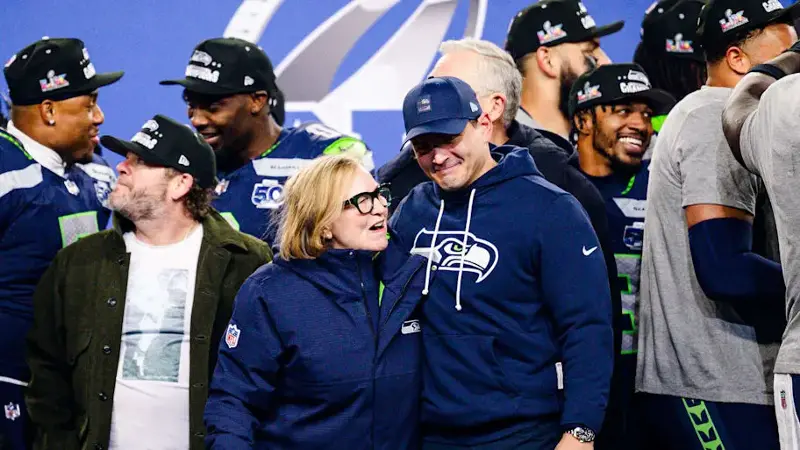
The Seattle Seahawks are back in the Super Bowl for the first time in over a decade, thanks to a thrilling win in the NFC Championship Game in front of a raucous home crowd at Lumen Field. But a win over the New England Patriots on Sunday would mean much more than a second Lombardi Trophy in the case: It would punctuate what's been multiple decades now of pretty much unbroken contention, a reminder to the rest of the league that this is an ascendant franchise showing no signs of slowing down.
Which is pretty remarkable, considering where it started. After all, for the first half of its history, Seattle was something of an NFL afterthought. But since 2000, only five teams — the Patriots, Pittsburgh Steelers, Green Bay Packers, Philadelphia Eagles and Baltimore Ravens — have more wins than the Seahawks do. That's quite the turnaround, and while the players and coaches who have come through Seattle share in a lot of the credit, it all starts with the family at the top. So let's take a look at who exactly owns the Seahawks franchise, and where their wealth comes from.
Who owns the Seattle Seahawks?
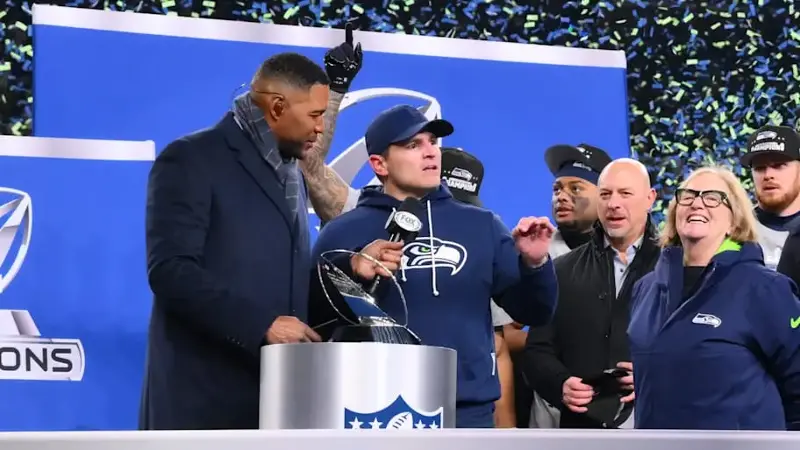
The Seahawks are owned by Jody Allen, who inherited the team from her older brother Paul Allen upon his death from non-Hodgkin lymphoma in the fall of 2018. The team has been in the Allen family since 1997, when Paul purchased it from a real estate developer named Ken Behring.
At the time, football in Seattle was on thin ice. The Seahawks had made the playoffs just four times since their inaugural season in 1976, and had posted just one winning season in the last decade. Their home stadium, the Kingdome, was on its last legs, and amid a fight over funding for a new one, Behring had threatened to move the team to southern California.
But Paul Allen, born and raised in Seattle, refused to let it happen, purchasing the team from Behring for $200 million (a little over $400 million today) and vowing that it would stay in his hometown. Just two years later, the Seahawks were back in the playoffs under new head coach Mike Holmgren, kicking off a quarter century of success and helping to inspire one of the most rabid fan bases in the NFL.
As executor and trustee of his estate, Jody Allen, Paul's little sister, inherited the Seahawks (as well as the Portland Trail Blazers and a minority stake in the Seattle Sounders) when he passed. And she appears to be ably carrying on her brother's legacy, guiding Seattle back to the Super Bowl with one of the best rosters and brightest young coaches in the sport.
Allen family wealth and net worth, explained

Jody Allen's net worth is estimated somewhere in the tens of billions, most of which comes from the estate of her late brother — who amassed his fortune by helping childhood friend Bill Gates found Microsoft in the 1970s. Allen and Gates attended school together in Seattle, quickly bonding over an interest in the personal computer revolution that was ongoing at the time. That passion eventually led them to Microsoft, with Allen serving as executive vice president and vice chairman under Gates as the company became one of the most lucrative in the country.
Tensions between the two men, as well as Allen's cancer diagnosis, led to his departure from the company in the mid-1980s. But Allen and Gates were later able to mend their relationship, and while Allen reduced his shares in Microsoft, he never got rid of them entirely. Which meant that, when the company went public in 1986, Allen became a very rich man — rich enough to ensure that his hometown Seahawks remained in Seattle for the foreseeable future.
As of 2014, Allen still held 100 million shares in Microsoft, shares which transferred to Jody upon his death. So it's safe to say the family is in pretty good hands moving forward.
Will Seahawks be put up for sale after Super Bowl?

And yet, the future of the franchise isn't on quite as stable ground. Last week, as Seattle began preparations for Super Bowl LX, The Athletic reported that the Seahawks were "expected to be put up for sale" at season's end.
Paul Allen's will stipulated that his investments in sports teams eventually be sold, with the proceeds going toward philanthropic endeavors. But it failed to provide a specific timeline, leaving everyone in the dark as to just how long the Seahawks would remain in the Allen family. It seems like that sale could come sooner rather than later, although a spokesman for the family estate told The Athletic that “the team is not for sale” and that “we’ve already said that will change at some point per Paul’s wishes, but I have no news to share.”
It's worth noting that any sale of the team prior to May 2024 would have incurred a 10 percent tax payable to the state of Washington, a stipulation included in the 1997 law that allowed for the funding of the construction of Lumen Field. Obviously, that stipulation no longer applies, which begs the question: Is Jody Allen looking to sell as soon as it's most profitable to do so? If the answer is yes, hopefully she'll honor her hometown and her late brother's legacy by making sure the Seahawks stay in Seattle for good. At this point, it's hard to imagine the league without them.