



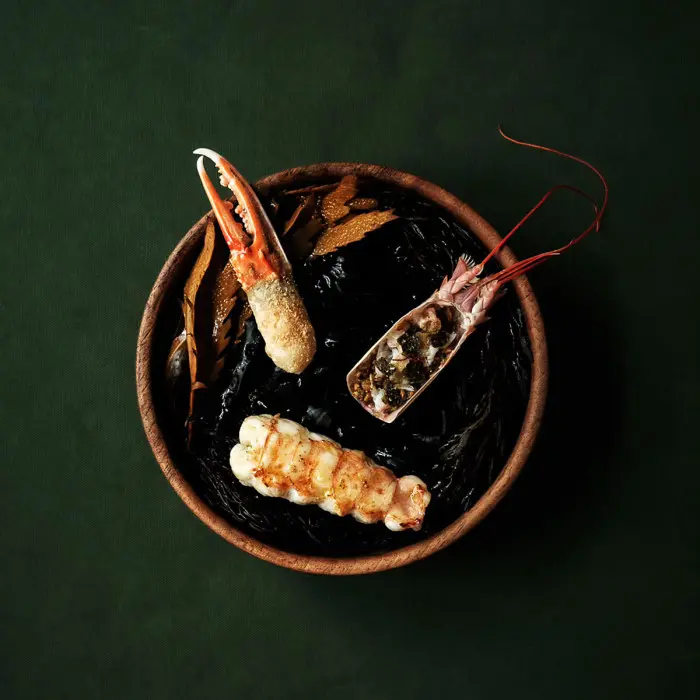
Founded on the Danish island of Bornholm, Kadeau is a celebration of the traditions and beauty of the island, told through the story of food.
"We come from a small island in Denmark called Bornholm, which is in the Baltic Sea. It's sort of isolated, far from Denmark and the microclimate is a little bit different from the rest of Scandinavia," says chef and co-owner Nicolai Nørregaard.
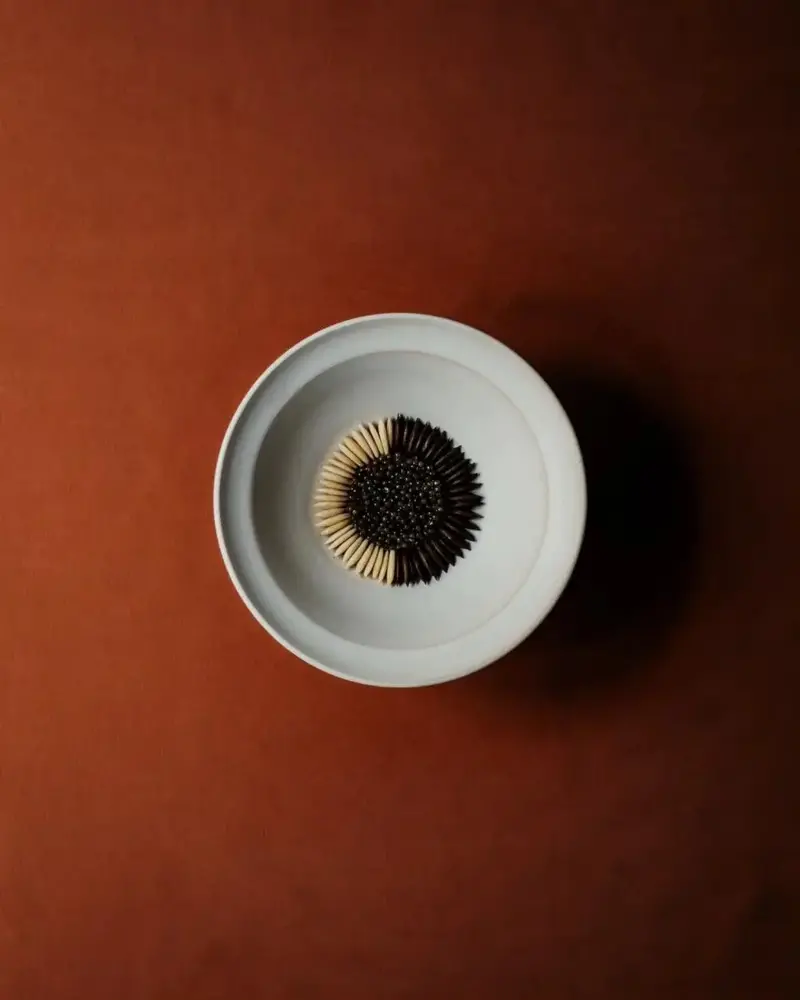
Oscietra Royal caviar with roasted and peeled pumpkin seeds, lightly-steamed brown crab from the west coast of Denmark and cherry blossom oil.
"The land is a bit more lush and there's different things growing there than the rest of Scandinavia. At Kadeau Bornholm, we centre our cooking around that. It is more vegetable and herb-based, rather than meat and fish. The Baltic Sea is running out of fish, so we are forced to focus more on the land. We also use a lot of shellfish, but more as a sort of a magnifying glass for texture, saltiness and creaminess. That's the main idea of the cuisine, along with preservation due to the cold winters," he adds.
Summers in the Nørregaard family were traditionally spent on preserving food for the winter and this philosophy carries on to the workings of Kadeau. "We usually do around 12 tonnes of preservation, which is a lot for a restaurant in the winter that has eight tables, but it's necessary. Our winter menu is completely based off that. In Kadeau Copenhagen, we have two tables."
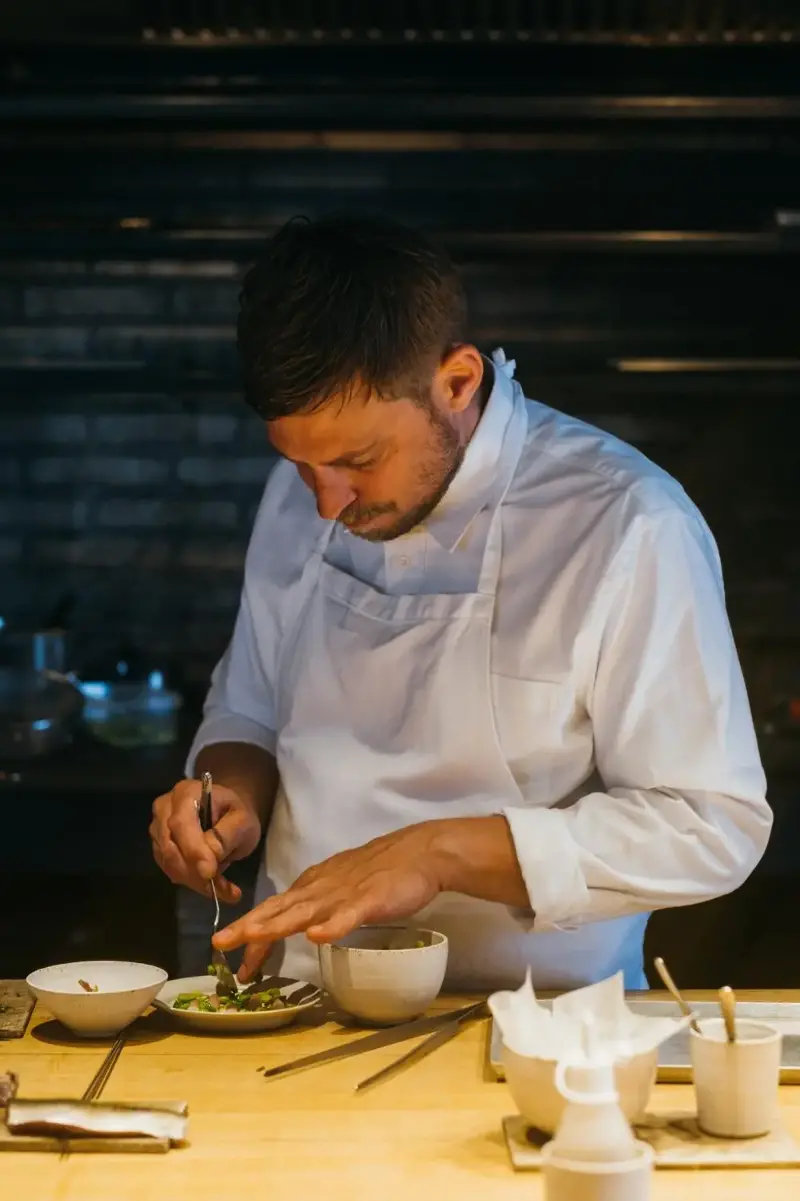
Nicolai Nørregaard, chef and co-owner of Kadeau Bornholm and Kadeau Copenhagen. (Photos courtesy of Kadeau)
Kadeau Bornholm opened in 2007 on the southernmost tip of the island and earned its first Michelin star in 2016. In 2011, Kadeau Copenhagen opened and was awarded two Michelin stars in 2018. Both restaurants were awarded a Michelin Green Star in 2023.
"Kadeau Bornholm is a seasonal restaurant, open for only five months of the year, though it is the bigger restaurant. A lot has changed on the island over my lifetime. The culinary history of the island is fish-based and has been since the Dark Ages, when salted herring would be used as a commodity and transported to almost Africa. This changed to smoked herring in the mid-1800s and they would be transported and sold to the rest of Denmark, Sweden and northern Germany.
"The dinner table would consist of large amounts of fish due to the plentiful salmon, turbot, mackerel and cod. But now, there's no fish any more. When I was growing up, preservation was classic Danish, like pickled pumpkin, marrow and cucumber. Of course, at Kadeau we take it to another level with produce," says the chef.
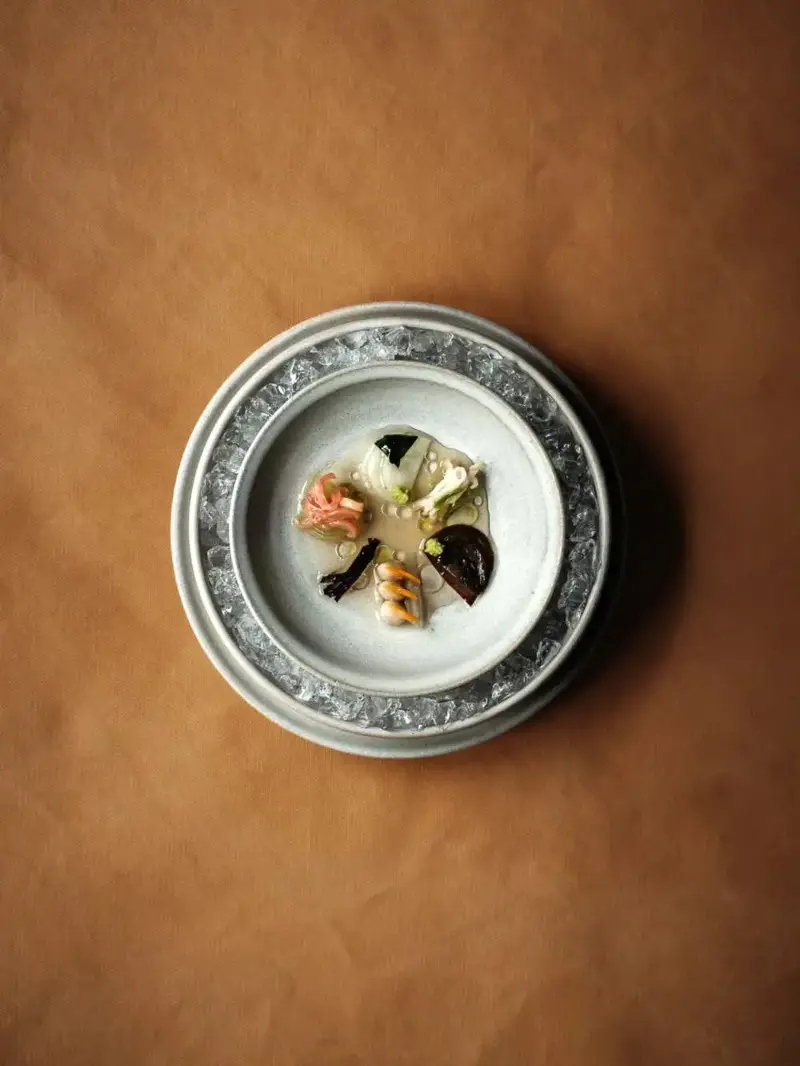
Mahogany clams, carpet clams and cockles with raw, salted and pickled vegetables. Icelandic wasabi and a sauce made from blue mussels and fermented peas.
Kadeau's signature dish is a tribute, much like its name, which means "paying respect" in Danish, to the smokehouses on Bornholm of yesteryear. Honouring the island's smoking heritage, the six-day cold- and hot-smoked salmon, is a staple on the tasting menu. After a week of curing, drying and cold-smoking, the salmon is hot-smoked over beech wood. The hot smoking is done right before service, which adds a final layer of flavour while rendering the fats to create a soft melting texture when eaten.
"The salmon is a combination of techniques, cold and hot smoke and it's because I come from a family of smokers. When I was growing up, smoking was done the traditional way, on an open fire. My aunt and uncle owned the last smokehouse that used the traditional method on Bornholm and I wanted to carry this legacy on."
"Our method is a combination of traditional methods. One traditional way of salmon is cold smoke and the other way is hot smoke. We combine them and the herring would usually be hot-smoked, but sort of as a fine dining produce. Herring is difficult to smoke. So, when we use herring, we use it raw, but salmon is easier to transform into something like a little bit more gastronomical," says chef Nørregaard.
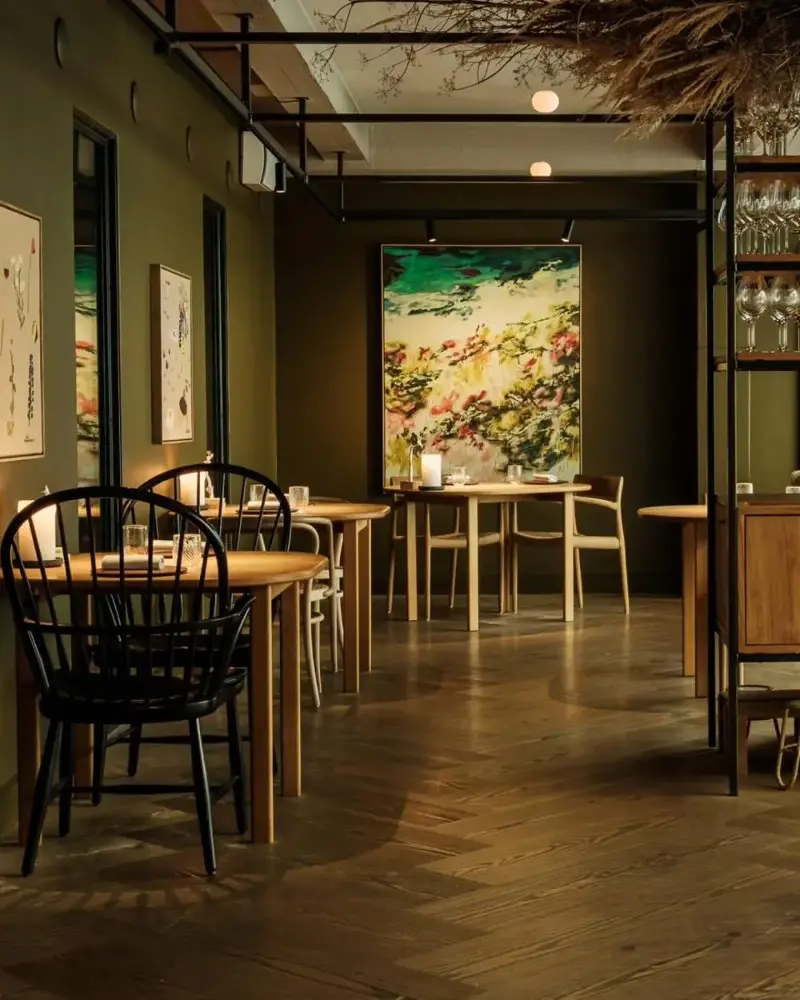
Kadeau Copenhagen.
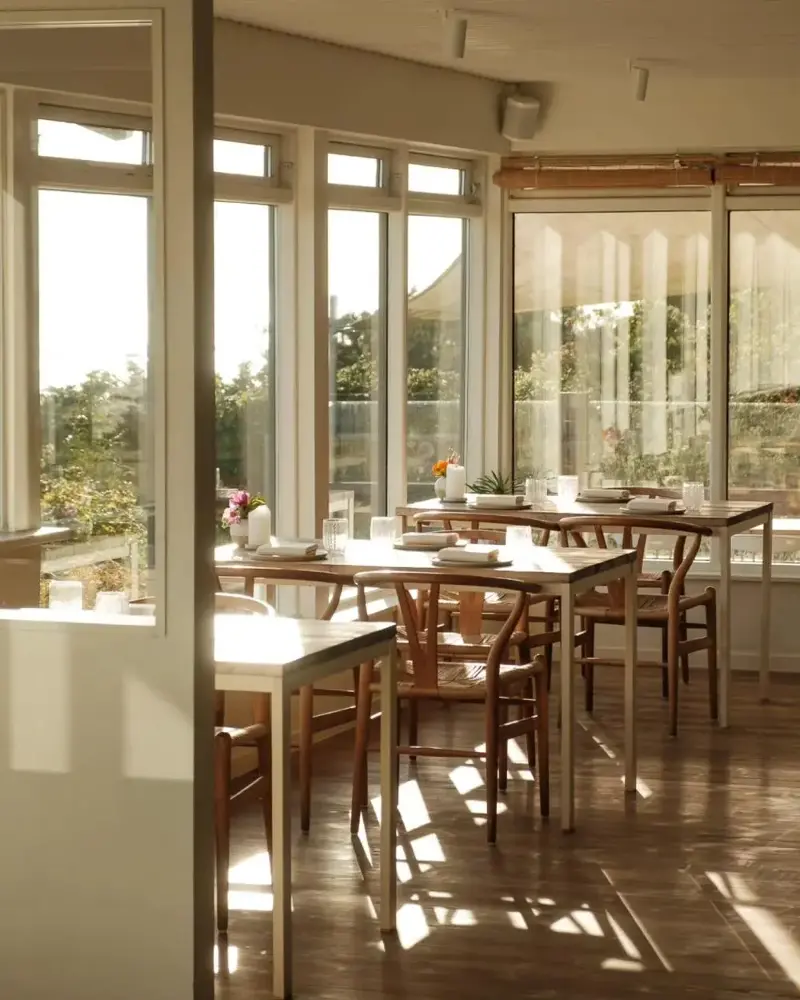
Kadeau Bornholm.
The cuisine at Kadeau is also influenced by countries surrounding the island. "Bornholm cuisine is a little bit different from the rest of Danish cuisine. Let's say it is 70% Danish and 30% Swedish, more or less. We have a garden on Bornholm where we try and grow everything our restaurants need. The end goal is to be self-sufficient. Though it is a large operation, we cannot do everything yet. Hopefully one day, we can grow everything in our own garden," adds the chef.
"The DNA of our kitchen is preservation. Even in the summertime, we preserve ingredients. In Copenhagen, we call it the summer menu and the menu changes completely twice a year. So there is growing season and preservation season. The menu features fresh ingredients with preserved elements. There can be things that we preserve in April for use in July. It's not because we need it, but because it's sort of such a big part of the flavour profile of what we do. We also forage to preserve.
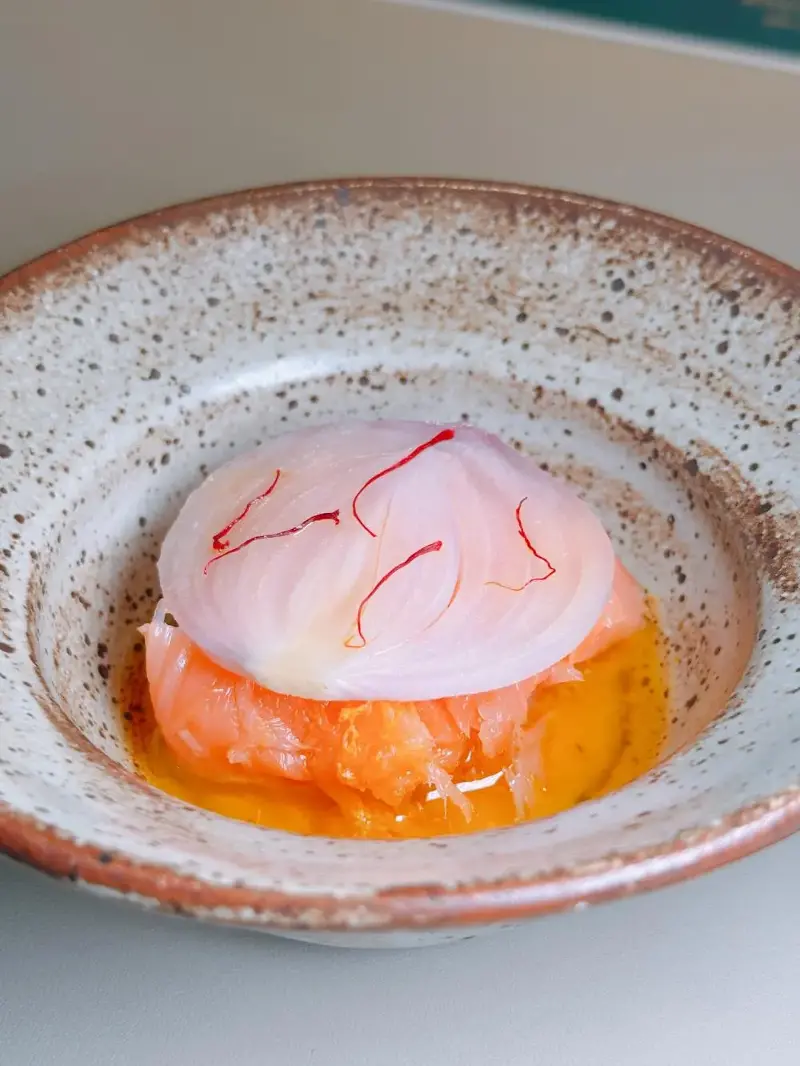
The cold- and hot-smoked salmon, born out of the traditional smoking methods of Kadeau's home in Bornholm. (Photo: Nianne-Lynn Hendricks)
"We force the creativity in Copenhagen by changing the menu and it is a big job to keep the consistency and evolve. When the Bornholm menu has a great dish or two in preservation season and we change the menu, then the dish is gone forever. Sometimes the stuff we do in the winter at Kadeau Copenhagen is revitalised for Bornholm in the summer. Of course, it all comes from the same hands, so it's very similar. You see the same ingredients, maybe in different combinations, but not the same dish.
"A lot of our preservation techniques are traditional, but we use them in different combinations. We invent things, such as we use our honey to make a syrup and take fruits, dry them, put them in jars and put the honey liquid on top. We preserve that in steam so the dried fruit soaks up all the liquid and then rehydrates. This is part of our preservation method, which is something that's quite unique. We call it honey canning.
"All chefs like to have a restaurant in a rural setting because it's easier to tell a story. But, it's also more difficult to get guests right and it's more difficult to get staff and logistics is more difficult. In Bornholm, we've recently taken over a beach camp, which is a glamping spot in the dunes 12km from the restaurant. We have luxury tents and a restaurant there. The menu at the restaurant is much more casual and has more of a Mediterranean vibe to it."
Chef Nørregaard is publishing a book in 2027 on his fermentation and preservation techniques. "2027 is our 20th anniversary so the plan is to launch the book in time for that," says the chef.